




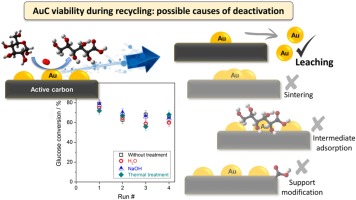
This work is devoted to the study of viability of immobilized gold colloids on carbon as catalysts for the base-free glucose oxidation reaction with a special emphasis made on catalysts' recycling, operational life and possible routes for deactivation/reactivation under batch conditions. The observed catalytic behavior is related to all possible manners of deactivation, like gold metal state changes (particle size agglomeration or leaching), support modifications or active sites blocking by intermediates. In an attempt to recover the initial catalytic activity, the samples are subjected to different treatments such as H2O and NaOH washings and calcination. The failure of the regeneration procedures to recover the initial activity and after detailed catalyst' characterization allows us to find out the main cause of deactivation
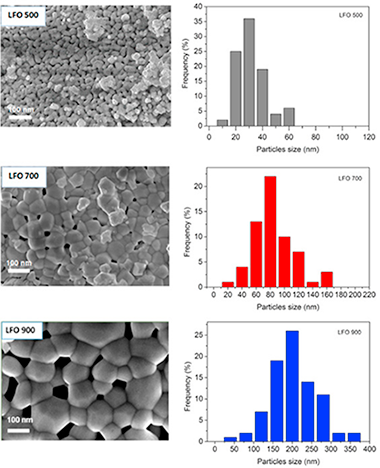
In this study, an investigation about the oxygen sensing properties of lanthanum orthoferrite (LaFeO3) ceramics is reported. LaFeO3 nanoparticles were synthesized by using tartaric sol-gel route and annealed in air at different temperatures (500, 700 and 900 degrees C). The samples have been characterized by using thermal analysis (TA), BET surface area and porosity, Fourier-transform infrared spectroscopy (FTIR), Raman spectroscopy, X-ray diffraction (XRD), and scanning electron microscopy (SEM). Results of sensing tests indicate that LaFeO3 nanoparticles exhibit good response to oxygen at mild temperatures (300-450 degrees C). The effect of annealing temperature on gas sensing performance was investigated, demonstrating that LaFeO3 ceramics obtained after annealing at 500 degrees C display better characteristics with respect to others. The oxygen sensor developed shows also high stability in humid environment and excellent selectivity to oxygen over other interfering gases such as CO, NO2, CO2, H-2 and ethanol.
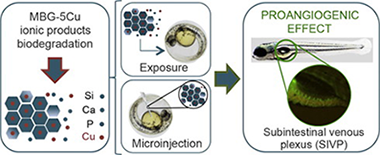
The osteogenic and angiogenic responses of organisms to the ionic products of degradation of bioactive glasses (BGs) are being intensively investigated. The promotion of angiogenesis by copper (Cu) has been known for more than three decades. This element can be incorporated to delivery carriers, such as BGs, and the materials used in biological assays. In this work, Cu-containing mesoporous bioactive glass (MBG) in the SiO2-CaO-P2O5compositional system was prepared incorporating 5% mol Cu (MBG-5Cu) by replacement of the corresponding amount of Ca. The biological effects of the ionic products of MBG biodegradation were evaluated on a well-known endothelial cell line, the bovine aorta endothelial cells (BAEC), as well as in an in vivo zebrafish (Danio rerio) embryo assay. The results suggest that ionic products of both MBG (Cu free) and MBG-5Cu materials promote angiogenesis. In vitro cell cultures show that the ionic dissolution products of these materials are not toxic and promote BAEC viability and migration. In addition, the in vivo assay indicates that both exposition and microinjection of zebrafish embryos with Cu free MBG material increase vessel number and thickness of the subintestinal venous plexus (SIVP), whereas assays using MBG-5Cu enhance this effect.
Mesoporous silica particles of type MCM-41 (Mobile Composition of Matter No. 41), exhibiting highly ordered mesoporosity (pores with diameter between 2 and 50 nm) and surface roughness, are developed and used as a functional coating on bioactive glass-based scaffolds for bone tissue engineering. The degradability and the mesostructure stability of these novel MCM-41 particles were evaluated. The particles are immersed in simulated body fluid (SBF) for up to 28 days at 37 degrees C, and the variation of the ordered porosity, surface characteristics, and chemical composition of the particles are assessed by SEM-EDX, HRTEM, FTIR, ICP-OES, and pH measurements. The results indicate that the MCM-41 particles are affected by immersion in SBF only during the first few days; however, the surface and the mesopore structure of the particles do not change further with increasing time in SBF. The pore channel diameter increased slightly, confirming the stability of the developed material. The release of dissolved Si-species, which reached a maximum of 260 mg SiO2 per gram of material, could play a key role in gene activation of osteoblast cells and in inducing new bone matrix formation.
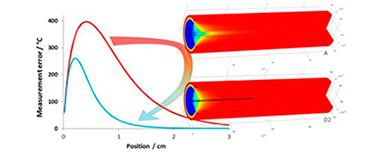
Proper temperature measurement is imperative in any laboratory study if reliable data are to be obtained, particularly in the field of chemical kinetics. In this paper we analyze in silico some typical thermowell configurations used in small-scale reactors by coupling computational fluid dynamics (CFD) with conjugated heat transfer phenomena. This allows us to identify deviations in measurements arising from thermal radiation and self-conductivity in mid and high temperature ranges, in addition to radial temperature gradients. A novel design is proposed and optimized by additional simulation, showing potential for faster and more accurate temperature measurements.
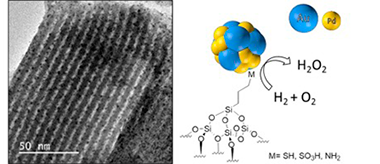
A series of gold-palladium catalysts supported in a mesoporous surface functionalized silica SBA-15 was studied for H2O2 direct synthesis. Support functionalization was performed using different organic groups (namely-SO3H, -NH2 and-SH) while metal was then supported by an ion exchanged method. Different Au-Pd/SBA-15 catalysts were tested in the Direct Synthesis of Hydrogen Peroxide (DSHP). Organic functional groups (-SH, -SO3H and-NH2) with acid-base properties acted as anchoring sites controlling both the dispersion of the metallic active phase and the chemical state of gold and palladium species as Au+ and Pd2+, respectively. Compared to a Au-Pd/SBA-15 system prepared by incipient wetness impregnation over non-functionalized SBA-15, catalytic performance is improved upon functionalization, increasing hydrogen peroxide rate in sulfonic-SBA-15 systems and reducing the hydrogenation/decomposition activity by adding amine groups. The occurrence of amine groups clearly suppresses the support microporosity and probably condition the metal cluster size. The analysis of particle size by TEM showed that sulfonated samples lead to a Pd size compromise which improves the H2O2 production hindering the competitive side reactions, particularly suppressed by the presence of amine groups.
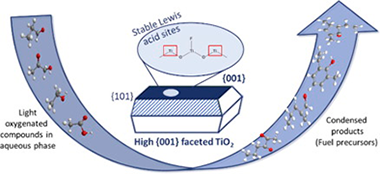
{0 0 1} faceted TiO2 catalysts are hydrothermally synthesized by using titanium(IV) isopropoxide and butoxide precursors (ISO and BUT TiO2samples) together with HF addition. Their activity and stability are evaluated in the catalytic condensation of light oxygenated organic compounds present in an aqueous model mixture simulating a real bio-refinery effluent, under moderate operation conditions. High {0 0 1} faceted TiO2 catalysts show organic products yields superior to those attained with other TiO2 samples (anatase, rutile, and P25). This enhanced catalytic activity relates to their physico-chemical and textural properties, such as high surface area (≈100 m2/g), regular morphology (platelets conformed by partially agglomerated TiO2 nanoparticles), and adequate Lewis acidity. XRD and Raman measurements evidence the unique presence of anatase crystalline phase in both ISO and BUT materials, in which the use of HF during synthesis produces the preferential growth of TiO2 crystals mainly exposing the {0 0 1} plane. This effective {0 0 1} facet exposition directly determines catalytic results. Moreover, TiO2 ISO catalyst shows outstanding stability under reaction conditions, maintaining practically unaltered their activity after several re-uses. In particular, Lewis acid sites present in TiO2 faceted materials are more stable in the presence of organic acids under aqueous environments. This opens new possibilities for the application of these materials in the valorization of light oxygenated compounds present in biomass-derived aqueous effluents.
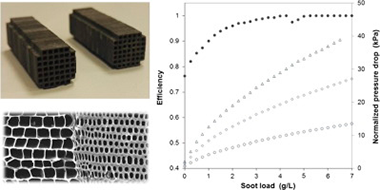
Biomorphic Silicon Carbide (bioSiC) has been recently introduced in the scope of porous ceramic substrates for hot gas filtration applications, where it has demonstrated to have good thermal and mechanical properties, and a high potential to meet the requirements for current Diesel Particulate Filters (DPF). In this experimental study, a small wall-flow bioSiC diesel filter was characterized using a soot generator, the particle size distribution of which being similar to the one generated by a diesel engine. The bioSiC samples were manufactured from Medium Density Fiberboard (MDF) following a general manufacturing procedure for bioSiC ceramics, but paying special attention in the mechanizing stage to the geometry and optimal design of the honeycomb structure required for diesel engine applications. The samples had a cell density of 57.59 cell/cm(2) (371.6 cpsi), a square cross section of 9.2 x 9.2 mm, and a length of 31 mm. To generate the particle laden stream and perform the filtration tests, a synthetic Soot Generator (SG) was used. Tests were performed under controlled and reproducible conditions, with a fixed gas flow rate of 5 LPM and a soot mass flow rate of 4 mg/h. The filtration efficiency was determined with the aid of a Scanning Mobility Particle Sizer (SMPS) from the measurements of the particle concentration upstream and downstream the filter samples. During the soot loading process, the pressure drop was also monitored. The results show that, in the initial stage (clean filter), bioSiC wall-flow DPFs may have a filtration efficiency between 0.7 and 0.85 and a pressure drop of around 2 kPa for a normalized wall velocity of 0.01 m/s at ambient temperature. The filtration performance of wall-flow bioSiC particle filters showed in this work can help us to better understand their real potential for automotive applications.

Hydrolysis of the Bi(III) aqua ion under a range of solution conditions has been studied by means of ab initio molecular dynamics simulations. While the Bi(III) aqua ion is stable in pure water, there is an increasing degree of hydrolysis with the number of hydroxide anions in the medium. This is accompanied by a monotonic decrease of the total coordination number to an asymptotic value of similar to 6, reached under extreme basicity conditions. Comparison of the simulated Bi(III) hydrolyzed species with the experimental species distribution at different degrees of basicity suggests that, at the PBE/DFT level of theory here employed, liquid water shows an overly acidic character. Predictions of theoretical EXAFS and XANES spectra were generated from the AIMD trajectories for different Bi hydrolyzed species, [Bi(HO)(m)(H2O)(n)](3-m+), m = 0-3 and n = 7-2. Comparison with available experimental spectra is presented. Spectral features joined to the degree of hydrolysis and hydration are analyzed.
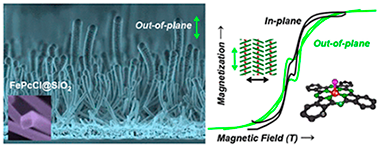
In this article we show for the first time the formation of magnetic supported organic nanowires (ONWs) driven by self-assembly of a nonplanar Fe(III) phthalocyanine chloride (FePcCl) molecule. The ONWs grow by a crystallization mechanism on roughness-tailored substrates. The growth methodology consists of a vapor deposition under low vacuum and mild temperature conditions. The structure, microstructure, and chemical composition of the FePcCl NWs are thoroughly elucidated and compared with those of Fe(II) phthalocyanine NWs by a consistent and complementary combination of advanced electron microscopies and X-ray spectroscopies. In a further step, we vertically align the NWs by conformal deposition of a SiO2 shell. Such orientation is critical to analyze the magnetic properties of the FePcCl and FePc supported NWs. A ferromagnetic behavior below 30 K with an easy axis perpendicular to the phthalocyanine plane was observed in the two cases with the FePcCl nanowires presenting a wider hysteresis. These results open the path to the fabrication of nanostructured one-dimensional small-molecule spintronic devices.
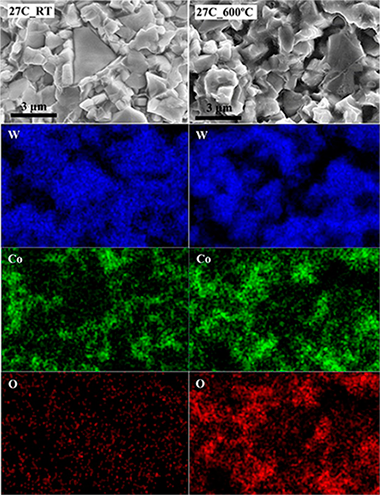
The effect of the temperature on the mechanical strength of WC-Co cemented carbides with different microstructures (grain size and binder content) was evaluated. Biaxial flexural tests were performed on three cemented carbide grades at 600 °C using the ball-on-three-balls (B3B) method. Results were interpreted by Weibull statistics and compared to biaxial strength results at room temperature. A detailed fractographic analysis, supported by Linear Elastic Fracture Mechanics, was performed to differentiate the nature and size of critical defects and the mechanism responsible for the fracture. A significant decrease in the mechanical strength (around 30%) was observed at 600 °C for all grades of cemented carbides. This fact was ascribed to the change in the critical flaw population from sub-surface (at room temperature) to surface defects, associated with the selective oxidation of Co. Additionally, an estimation of the fracture toughness at 600 °C was attempted for the three cemented carbides, based upon the B3B strength results, the corresponding number of the tested specimens fragments and the macroscopic area of the B3B fracture surfaces. The fracture toughness was not affected by the temperature, at least up to 600 °C. In addition, the good agreement with the Single Edge Notch Beam toughness data suggests the possibility of employing this approach for fracture toughness evaluation of brittle materials under different testing conditions.
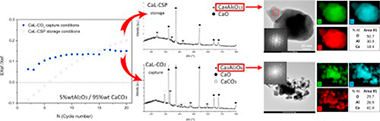
This work reports the Calcium-Looping (CaL) multicycle performance under energy storage and CO2 capture conditions of different Al-composites prepared by milling mixtures of nanoalumina and natural limestone powders. The micro-and nanostructure of the composites have been analyzed by X-ray diffraction, scanning electron microscopy and high-resolution transmission electron microscopy as affected by the type of CaL conditions employed, either for energy storage in Concentrated Solar Power (CSP) plants or for post-combustion CO2 capture. Two types of calcium aluminates are formed under these diverse CaL conditions. A calcium aluminate with ratio Ca/Al < 1 (Ca4Al6O13) is formed under CaL-CSP conditions, which helps stabilize the CaO microstructure and mitigate pore-plugging. On the other hand, a crystalline phase Ca3Al2O6 is formed (Ca/Al > 1) under CaL-CO2 capture conditions presumably due to the higher calcination temperature, which withdraws from the sorbent a relatively higher amount of active Ca. Moreover, the addition of nano-alumina, and the consequent generation of calcium aluminate, affects in a diverse way the microstructure and morphology of the CaO particles as depending on the CaL application, which critically modifies the performance of the composites.
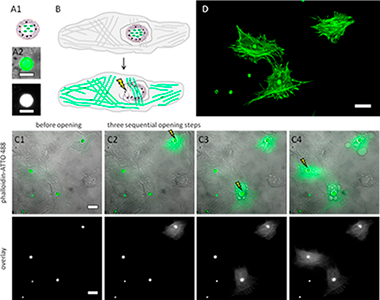
Fluorescent molecular markers were encapsulated. The capsules were additionally modified with plasmonic nanoparticles. The encapsulated markers were endocytosed by cells. Upon light stimulation the plasmonic nanoparticles generated heat, which opened the encapsulation and transiently perforated the endosomal/lysosomal membrane surrounding the capsule, thus allowing for release of the marker into the cytosol. Fluorescence labeling of different intracellular compartments was demonstrated in this way. Most important, the cells do not need to be fixed and perforated, as the molecular markers are introduced into cells by endocytosis and subsequent light-induced release. Thus this technique allows for intracellular fluorescence labeling of living cells.
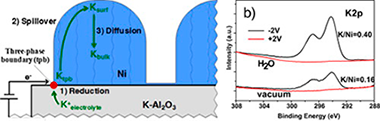
In this work we investigate by in-situ near-ambient pressure photoemission (NAPP) spectroscopy the phenomenon of Electrochemical Promotion of Catalysis (EPOC). We studied the reduction and diffusion kinetics of alkaline ions in a solid electrolyte cell formed by a nickel electrode supported on K+-beta-alumina electrolyte. Experiments in ultra-high vacuum and in the presence of steam showed that the amount of potassium atoms supplied to the surface is probably affected by nickel electronic modifications induced by adsorbed OH- groups. It was also deduced that part of the segregated potassium would be adsorbed at inner interfaces where it would be inaccessible to the photoelectron analyzer. A migration mechanism of the promoter is proposed consisting in: (i) the electrochemical reduction of the alkali ions (potassium) at the Ni/solid electrolyte/gas interface; (ii) the spillover of potassium atoms onto the Ni gas-exposed surface; and (iii) the diffusion of potassium atoms to Ni inner grain boundary interfaces.

This study demonstrates a design that maximizes the power radiated into free space from a monolayer of nanoemitters embedded in a flexible distributed Bragg reflector conformably attached to a metal surface. This is achieved by positioning the light source at the precise depth within the multilayer for which optical Tamm states provide enhanced quantum yield and outcoupling efficiency, which are combined to optimize the luminous power radiated by the surface of the ensemble. This approach, based on the adhesion of flexible multilayer stacks onto metal surfaces with an arbitrary curvature, is versatile and permits the realization of spectrally narrow monodirectional or self-focusing light-emitting surfaces.
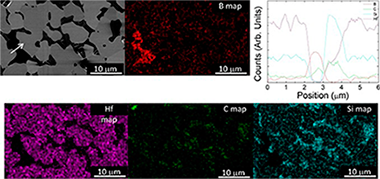
High temperature compressive creep of SiC-HfB2 UHTCs up to 2000 °C has been studied. Microstructural analysis after deformation reveals formation of new phases in the Hf-B-Si and Hf-B-Si-C systems, which are responsible for the poor creep resistance. RE oxide additions have a negative effect reducing the creep resistance of SiC-HfB2 UHTCs. A simplistic analysis for the required creep resistance is described, indicating that only SiC-HfB2 UHTCs could withstand re-entry conditions for 5 min in a single use. However, RE oxide addition to SiC-HfB2UHTCs does not provide the required creep resistance for them to be candidate materials for hypersonic applications.

Understanding how a photocatalyst modulates its oxidation state, size, and structure during a photocatalytic reaction under operando conditions is strongly limited by the mismatch between (catalyst) volume sampled by light and, to date, the physicochemical techniques and probes employed to study them. A synchrotron micro-beam X-ray absorption spectroscopy study together with the computational simulation and analysis (at the X-ray cell) of the light-matter interaction occurring in powdered TiO2-based monometallic Cu, Ni and bimetallic CuNi catalysts for hydrogen production from renewables was carried out. The combined information unveils an unexpected key catalytic role involving the phase contact between the reduced and oxidized non-noble metal phases in all catalysts and, additionally, reveals the source of the synergistic Cu-Ni interaction in the bimetallic material. The experimental method is applicable to operando studies of a wide variety of photocatalytic materials.
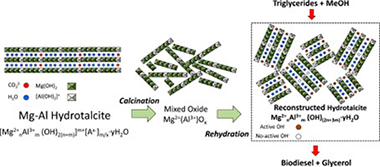
There is still a need for active, selective and stable heterogeneous catalysts for the synthesis of biodiesel. In this work, magnesium-aluminium hydrotalcites with Mg/Al molar ratios within the 1.5-5 range were synthesized by coprecipitation and used as transesterification catalysts for the synthesis of biodiesel. The mixed oxides obtained after calcination recovered the hydrotalcite structure in the form of meixnerite after rehydration in boiling water. The solids were characterized by XRD, TGA, N-2 adsorption-desorption, and SEM. Basic properties were assessed by means of Hammett indicators and CO2-TPD. Rehydrated materials with the highest Mg/Al ratios showed some distinctive features: low surface area, well defined flake-like crystals, high basicity and strong basic sites with H_ values above 11. They were also the most active catalysts allowing to achieve 51-75% sunflower oil methanolysis conversion after 8 h of reaction under mild conditions (60 degrees C, 1 atm), methanol/oil molar ratio of 12 using between 2 and 6 wt% of catalyst. The conversion increased up to 96% (92% fatty acid methyl esters yield) using 2 wt% catalyst and methanol/oil molar ratio of 48. Catalyst leaching was not a serious problem with these solids that could be reutilized maintaining very good activities. A general accordance between solids basic properties and their catalytic performance has been observed. These results are among the best reported in the literature for heterogeneous methanolysis catalysts and have been attributed to the high basicity of the rehydrated solids and the presence of strong and accessible basic sites probably consisting in interlayer hydroxide anions at the edges of the crystals.
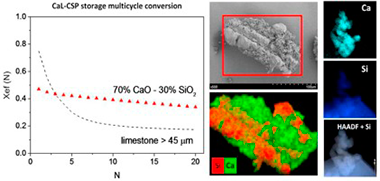
An ever more environmentally conscious society demands the use of green, sustainable and high-efficiency renewable energy resources. However, large-scale energy storage remains a challenge for a deep penetration of power produced from renewables into the grid. The Calcium-Looping (CaL) process, based on the reversible carbonation/calcination of CaO, is a promising technology for thermochemical energy storage (TCES) in Concentrated Solar Power (CSP) plants. Natural limestone to be used as CaO precursor is cheap, non-toxic and abundant. Nevertheless, recent works have shown that carbonation of CaO derived limestone at optimum conditions for TCES is limited by pore-plugging, which leads to severe deactivation for large enough particles to be employed in practice. In our work, we have synthesized inexpensive CaO/SiO2 composites by means of a biotemplate method using rice husk as support. The morphological and compositional features of the biomorphic materials synthesized help improve the CaO multicycle activity under optimum CSP storage conditions and for particles sufficiently large to be managed in practical processes.
Surface-fluorinated TiO2 materials with high {001} facet exposure were prepared by a simple and high-yield preparation procedure. Faceted/fluorinated samples showed a high photocatalytic performance not only in oxidation processes, tested in phenol and methyl orange degradation, but also in a reduction process as Cr(VI) photoreduction. Reaction rates for these materials greatly exceeded the ones obtained for materials prepared without fluorine addition and for commercial TiO2 Degussa (Evonik) P25 used as reference photocatalyst. A broad characterisation of the samples allowed us to estimate the percentages of different facets and the amount and form in which the fluorine is found on the surfaces. Good photocatalytic behaviour can be ascribed to both high {001} facet exposure and adsorbed fluorine on the photocatalysts surfaces.
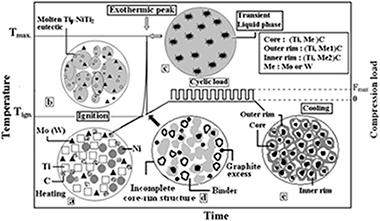
TiC-Ni-based cermets were obtained by thermal explosion from different elemental mixtures (Ti, C, Ni and X, where X = Cr, Mo or W) and subsequently densified by hot-pressing under a cyclic load. The whole process was performed in a single stage in the same experimental device according to the following thermal and pressure procedure: a heating rate ramp up to 1573 K without applying any load followed by an isothermal dwelling under a compressive cyclic load of 32 MPa. The thermal explosion synthesis occurred during the heating ramp at a temperature close to 1273 K that was practically independent of the starting nominal composition. The influence of different refractory elements on the chemical composition and microstructure of cermets was studied. SEM characterization showed that only with Mo and W, the cermets developed the characteristic core-rim structure. A high densification was achieved, but decreased when the refractory elements were added. Nevertheless, in these cases higher hardness values were obtained.

A series of four Ni catalysts supported on SBA-15 and on a high SiO2 surface area have been prepared by modified impregnation (ImU) and deposition-precipitation (DP) methods. The catalysts have been extensively characterized, including in situ XAS (bulk sensitive) and XPS (surface sensitive) techniques, and their catalytic activities evaluated in the dry reforming reaction of methane (DRM). The combined use of XPS and XAS has allowed us to determine the location of nickel particles on each catalyst after reduction at high temperature (750 degrees C). Both Ni/SiO2-DP and Ni/SBA-15-DP catalysts yield well-dispersed and homogeneous metallic phases mainly located in the mesoporosity of both supports. On the contrary, the Ni/SiO2-ImU and Ni/SBA-15-ImU catalysts present a bimodal distribution of the reduced nickel phase, with nickel metallic particles located out and into the mesoporous structure of SiO2 or the SBA-15 channels. The Ni/SBA-15-DP catalyst was found the most stable and performing system, with a very low level of carbon deposition, about an order of magnitude lower than the equivalent ImU catalyst. This outstanding performance comes from the confinement of small and homogeneous nickel particles in the mesoporous channels of SBA-15, which, in strong interaction with the support, are resistant to sintering and coke deposition during the demanding reaction conditions of DRM.
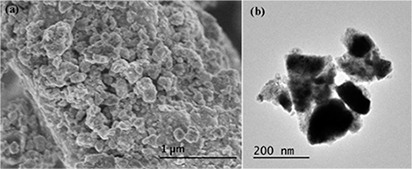
Tantalum diboride (TaB2) nanoparticles were synthesized through a mechanically induced self-sustaining reaction (MSR). In this method, the ternary system of Mg/Ta2O5/B was employed in which, magnesium was used as a reducing agent for reduction of tantalum oxides in a combustive regime. The processing route of TaB2 by the solid-state combustion was very short-term and the product purification was extremely easy and rapid. The synthesis mechanism was studied and revealed that magnesiothermic reduction of tantalum oxide is the initiator of the total reaction, while borothermic reduction of the oxide may occur in parallel.
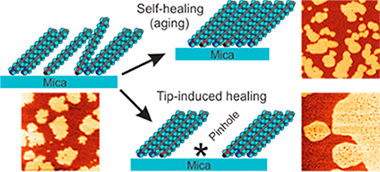
Self-assembled monolayers of n-octadecylamine (ODA-SAMs) on mica have been prepared and studied by contact and jumping mode atomic force microscopy (AFM). Adhesion and friction data show that the compactness of the monolayers spontaneously increases as they are allowed to ripen. Molecular packing can also be induced by the controlled mechanical perturbation exerted by the probe when getting into and out of contact intermittently. Under these conditions, defects and vacancies aggregate giving rise to detectable pinholes uniformly distributed in AFM images. Created pinhole density was found to decrease with ripening time, thus confirming the proposed spontaneous self-healing mechanism. Pinhole density is also suggested as a parameter characterizing the packing degree of ODA-SAMs, and it has been related to their tribological properties. Additionally, molecular dynamics simulations were used to corroborate the compatibility between the packing degree and the observed topography of ODA-SAMs on mica.

A fluidic permeable and stable in wet media, MBG-NfGel, device consisting of a mesoporous ceramic embodied in a nanofibrillar biodegradable polymer has been processed using appropriate thermally induced phase separation (TIPS) processing variables of 5.4% (wt/v) gelatin in 50/50 water/ethanol (v/v) ratio. The device comprises high surface area mesoporous bioactive glass (MBG) microparticles within a fibrous matrix of 170 nm average diameter nanofibers gelatin, forming a meshwork of 0.2-1.6 mu m range voids. Gentamicin sulphate (GS) antibiotic high loading capacity and sustained release ability, as well as in vitro bioactivity and osteoprogenitor cells biocompatibility supports long-term antibacterial and bone growth stimulation properties. Antibiotic local delivery functionality in vitro of this device has been analysed and discussed in relation to other systems previously reported. The presented device properties as well as its industrial scalability potential, in terms of process reliability and absence of toxic chemical agents, low raw material biopolymer cost and immunogenicity, are other important advantages. These advantages rank MBG-NfGel device as a potential candidate to further development for application as local antibiotic device in bone surgery and therapy.
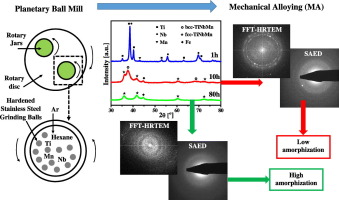
In this work, a novel amorphous-nanocrystalline titanium-niobium-manganese solid solution ternary alloy with a Ti-33Nb-4Mn (at.%) nominal composition was developed by a High-Energy Mechanical Alloying. Nb and Mn were added to the elemental Ti as a beta-phase (bcc) stabilizer and an amorphization promoter, respectively. The system evolved from the elemental Ti, Nb and Mn raw materials to a body centred cubic (bcc) TiNbMn alloy and, finally, to the formation of an original and stable face centred cubic (fcc) nanocrystalline TiNbMn alloy, not reported until now, at short milling time (20 h). This alloy remains invariant until 120 h. In turn, the partial amorphization of the system occurs and increases until at intermediate milling time (80 h). The production of both original fcc and the amorphous TiNbMn alloy may be beneficial for reducing the Young's modulus and improving the mechanical strength pursued for the Ti alloy. The optimal milling time respect to the amorphization, nanocrystalline size and Fe mount from milling media was 60 h and 80 h (TiNbMn60h and TiNbMn80h), with > 50 wt% of an amorphous phase and a crystalline domain size of approximately 5 nm.
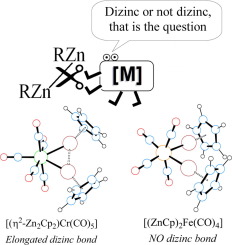
Following the synthesis of [Zn-2(eta(2)-C5Me5)(2)] (in short [Zn2Cp*(2)]) many complexes of the directly bonded Zn-Zn unit were prepared and characterized, leading to the recognition of an isolobal analogy between the Zn-Zn bond and the molecule of dihydrogen. Prompted by these results, we have investigated eta(2)-eta(2)-coordination of [Zn2Cp2] and [Zn2Ph2] (Cp = C5H5, Ph = C6H5) to several selected transition metal fragments and report herein the results of a QTAIM study of complexes [(ZnR)(2)Fe(CO)(4)], [(eta(2)-Zn2R2)M(CO)(5)]] and [(eta(2)-Zn2R2)Pd(PR'(3))(2)] (for R = Cp, Ph; M = Cr, Mo, W; and R' = F, H, Me). A decrease of rho(BCP), Delta(2) rho(BCP) and delocalization indexes delta(Zn, Zn), relative to corresponding values in the parent molecules of [Zn2Cp2] and [Zn2Ph2], accompanied dizinc coordination. In most cases the computed d(Zn, Zn) parameters were indicative of significant electron density sharing between the two Zn atoms. Nevertheless, the interaction with [Fe(CO)(4)] resulted in oxidative cleavage of the coordinated Zn-Zn bond, due to high pi backdonation to the sigma* Zn-2 MO as deduced from the delta(M, O-CO) index. The Zn-Zn bond critical points identified in our study are discussed. The computed Zn-Zn contacts concentrate in the range 2.44-2.58 angstrom, and we propose that this interval corresponds to elongated dizinc bonds.
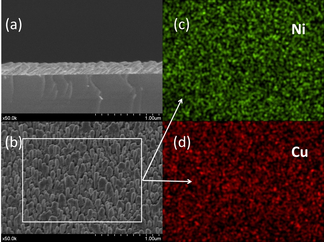
This work reports about the performance of a Ni/Cu-modified screen printed electrodes (SPE/Ni/Cu), prepared by physical vapor deposition (PVD) in an oblique angle configuration (OAD), for non-enzymatic glucose sensing applications. SPE/Ni/Cu electrodes showed an excellent reversibility and a catalytic behavior for detection of glucose that were controlled by the diffusion of reactants up to the active sites at the electrode surface. The study with a flow injection analysis (FIA) setup of the main experimental variables affecting the detection process has shown that the developed electrode system had an excellent glucose sensitivity of 1.04AM(-1)cm(-2) (R-2:0.999), a linear response up to 1mM, a limit of detection of 0.33M and a time of analysis of ca. 30s per sample. The selectivity of the sensor was checked against various interferences, including ascorbic acid, uric acid, acetaminophen and other sugars, in all cases with excellent results. The feasibility of using this sensor for practical applications was successfully confirmed by determining the glucose concentration in different commercial beverages.
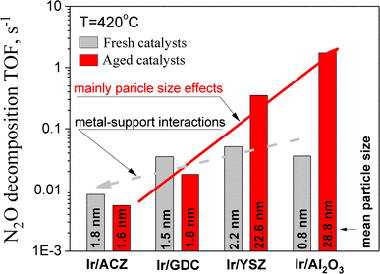
The effect of the morphology of Ir particles supported on.-Al2O3, 8 mol% Y2O3-stabilized -ZrO2 (YSZ), 10 mol%Gd2O3-doped CeO2 (GDC) and 80 wt%Al2O3-10 wt%CeO2-10 wt%ZrO2 (ACZ) on their stability on oxidative conditions, the associated metal-support interactions and activity for catalytic decomposition of N2O has been studied. Supports with intermediate or high oxygen ion lability (GDC and ACZ) effectively stabilized Ir nanoparticles against sintering, in striking contrast to supports offering negligible or low oxygen ion lability (gamma-Al2O3 and YSZ). Turnover frequency studies using size-controlled Ir particles showed strong structure sensitivity, de-N2O catalysis being favoured on large catalyst particles. Although metallic Ir showed some de-N2O activity, IrO2 was more active, possibly present as a superficial overlayer on the iridium particles under reaction conditions. Support-induced turnover rate modifications, resulted from an effective double layer [O delta--delta(+)](Ir) on the surface of iridium nanoparticles, via O2- backspillover from the support, were significant in the case of GDC and ACZ.
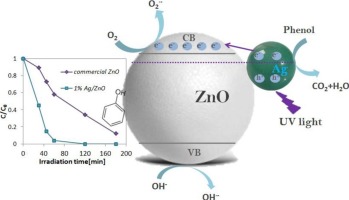
Different photocatalysts based on commercial ZnO modified by silver photodeposition were prepared in this work. The samples were characterized by X-ray fluorescence spectrometry (XRF), specific surface area (SSA), transmission electron microscopy (TEM), X-ray photoelectron spectroscopy (XPS), X-ray diffraction (XRD) and UV–vis diffuse reflectance (UV–vis DRS). XRD and XPS showed that Ag/ZnO samples are composed of metallic Ag (Ag0) and ZnO structure was identified. Furthermore, TEM analysis evidenced that the number of silver particles increased with the Ag content. At last, UV–vis DRS results revealed a reflectance band for Ag/ZnO samples, ascribed to the surface plasmon resonance (SPR) absorption of metal silver particles. Commercial ZnO and Ag/ZnO samples were evaluated in the phenol removal under UV light irradiation. It was observed an enhancement of photocatalytic phenol removal from aqueous solutions by silver addition in comparison to commercial ZnO. In particular, the phenol removal increased with the silver content from 0.14 to 0.88 wt%, after this content (i.e 1.28 wt%) the phenol degradation significantly decreased indicating that the optimal Ag content was equal to 0.88 wt%. The influence of the best photocatalyst dosage and the change of the initial phenol concentration in solution were also investigated in this work and the best photocatalytic performance was obtained by using 50 mg L−1 of phenol initial concentration and 0.15 g L−1 of photocatalyst dosage. Finally, the optimized Ag/ZnO photocatalyst was employed for the treatment of a real drinking wastewater containing phenol in which the almost total phenol removal was achieved after 180 min of UV irradiation time.
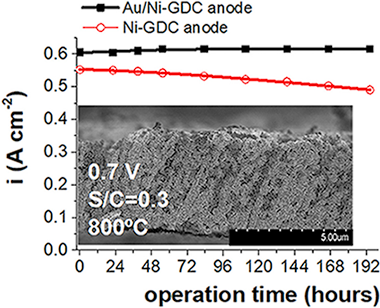
Ultrathin porous solid oxide fuel cell (SOFC) anodes consisting of nickel-gadolinia-dopedceria (Ni-GDC) cermets with a unique porous micro-columnar architecture with intimate contact between the GDC and the Ni phases were made by magnetron sputtering at an oblique deposition angle and characterised in detail by a variety of methods prior to use in hydrogen or methane-fuelled SOFCs. These Ni-GDC anodes exhibited excellent transport properties, were robust under thermal cycling and resistant to delamination from the underlying yttria-stabilised zirconia electrolyte. Similarly prepared Au-doped Ni-GDC anodes exhibited the same morphology, porosity and durability. The gold associated exclusively with the Ni component in which it was present as a surface alloy. Strikingly, whatever their treatment, a substantial amount of Ce3+ persisted in the anodes, even after operation at 800 degrees C under fuel cell conditions. With hydrogen as fuel, the un-doped and Au doped Ni-GDC anodes exhibited identical electrochemical performances, comparable to that of much thicker commercial state-of-the-art Ni-GDC anodes. However, under steam reforming conditions with CH4/H(2)0 mixtures the behaviour of the Au-doped Ni-GDC anodes were far superior, exhibiting retention of good power density and dramatically improved resistance to deactivation by carbon deposition. Thus two distinct beneficial effects contributed to overall performance: persistence of Ce3+ in the working anodes could induce a strong metal-support interaction with Ni that enhanced the catalytic oxidation of methane, while formation of a Ni Au surface alloy that inhibited carbonisation and poisoning of the active nickel surface.
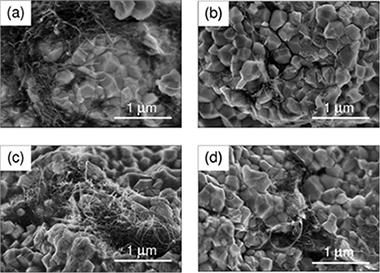
Different colloidal powder processing routines have been used to prepare composites of 3 mol% Y2O3 -ZrO2 (tetragonal zirconia polycrystals, 3YTZP) with 2.5 vol% multiwall carbon nanotubes (MWNT) with the aim of achieving a homogeneous distribution of the MWNTs in the ceramic, eliminating agglomerates but also minimizing carbon nanotube (CNT) damage during processing. Modifications of the acid treatment applied to the nanotubes, including subjecting them to stirring or ultrasonic agitation, and use of acid or basic pH during composite powder mixing have been approached.
No MWNT damage during processing was detected by Raman spectroscopy. CNT bundles were found in all the composites forming different patterns depending on the processing route. Similar values of hardness were obtained for all the composites, while different anisotropy in fracture propagation was found when studying parallel and perpendicular directions to the sintering pressing axis on the cross sections of the composites due to the MWNT preferential alignment. The CNT bundles were found to act as fracture short paths. A similar anisotropic behavior was observed for the electrical conductivity. These results have been correlated to the different microstructures obtained in the composites prepared with different processing routines.

Biomorphic Silicon Carbide (bioSiC) is a novel porous ceramic material with excellent mechanical and thermal properties. Previous studies have demonstrated that it may be a good candidate for its use as particle filter media of exhaust gases at medium or high temperature. In order to determine the filtration efficiency of biomorphic Silicon Carbide, and its adequacy as substrate for diesel particulate filters, different bioSiC-samples have been tested in the flue gases of a diesel boiler. For this purpose, an experimental facility to extract a fraction of the boiler exhaust flow and filter it under controlled conditions has been designed and built. Several filter samples with different microstructures, obtained from different precursors, have been tested in this bench. The experimental campaign was focused on the measurement of the number and size of particles before and after placing the samples. Results show that the initial efficiency of filters made from natural precursors is severely determined by the cutting direction and associated microstructure. In biomorphic Silicon Carbide derived from radially cut wood, the initial efficiency of the filter is higher than 95%. Nevertheless, when the cut of the wood is axial, the efficiency depends on the pore size and the permeability, reaching in some cases values in the range 70–90%. In this case, the presence of macropores in some of the samples reduces their efficiency as particle traps. In continuous operation, the accumulation of particles within the porous media leads to the formation of a soot cake, which improves the efficiency except in the case when extra-large pores exist. For all the samples, after a few operation cycles, capture efficiency was higher than 95%. These experimental results show the potential for developing filters for diesel boilers based on biomorphic Silicon Carbide.

The photochemical conversion of methane into methanol from H2O2 aqueous solution as well as the effect of the addition mode were studied. Direct addition of different amounts H2O2 leads to increasing methanol production at the first stage of the reaction. The excess of H2O2 would lead to the reactive oxygen species scavenging and the subsequent O2 production. It was also corroborated that extra hydroxyl radicals in the aqueous medium do not improve the formation of methanol but a noticeable increase in the formation of HCOOH with respect to methanol was evidenced. In contrast, dosing addition at relatively low rates leads to constant methane consumption towards methanol. Methanol formation would be in this case in equilibrium with further oxidation to HCOOH or CO2. This suggests that only a controlled constant availability of HO’s at low concentration can enhance the performance of methanol generation in the photochemical process.
In this work we have developed an infiltration methodology to incorporate metal nanoparticles (NPs) of controlled size and shape into the open voids available in oblique angle deposited thin films. These NPs exhibited well-defined surface plasmon resonances (SPRs). The nanometric confined space provided by their porous microstructure has been used as a template for the growth of anisotropic NPs with interesting SPR properties. The fabrication methodology has been applied for the preparation of films with embedded Ag and Au NPs with two associated plasmon resonance features that developed a dichroic behaviour when examined with linearly polarized light. A confined alloying process was induced by near IR nanosecond laser irradiation yielding bimetallic NPs with SPR features covering a large zone of the electromagnetic spectrum. The possibilities of the method for the tailored fabrication of a wide range colour palette based on SPR features are highlighted.

Eu-doped Sr1–x/2Al2–xSixO4 (x = 0.2, 0.4, and 0.5) transparent ceramics have been synthesized by full and congruent crystallization from glasses prepared by aerodynamic levitation and laser-heating method. Structural refinements from synchrotron and neutron powder diffraction data show that the ceramics adopt a 1 × 1 × 2 superstructure compared to the SrAl2O4 hexagonal polymorph. While the observed superstructure reflections indicate a long-range ordering of the Sr vacancies in the structure, 29Si and 27Al solid-state NMR measurements associated with DFT computations reveal a significant degree of disorder in the fully polymerized tetrahedral network. This is evidenced through the presence of Si–O–Si bonds, as well as Si(OAl)4 units at remote distances of the Sr vacancies and Al(OAl)4 units in the close vicinity of Sr vacancies departing from local charge compensation in the network. The transparent ceramics can be doped by europium to induce light emission arising from the volume under UV excitation. Luminescence measurements then reveal the coexistence of Eu2+ and Eu3+ in the samples, thereby allowing tuning the emission color depending on the excitation wavelength and suggesting possible applications such as solid state lighting.
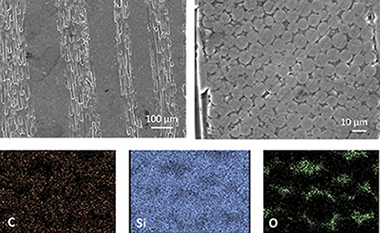
Fiber bonded silicon carbide ceramic materials provide cost-advantage over traditional ceramic matrix composites and require fewer processing steps. Despite their interest in extreme environment thermostructural applications no data on long term mechanical reliability other than static fatigue is available for them. We studied the high temperature compressive strength and creep behavior of a fiber bonded SiC material obtained by hot-pressing of Si Ti-C-O fibers. The deformation mechanism and onset of plasticity was evaluated and compared with other commercial SiC materials. Up to 1400 degrees C, plasticity is very limited and any macroscopic deformation proceeds by crack formation and damage propagation. A transient viscous creep stage is observed due to flow in the silica matrix and once steady state is established, a stress exponent n similar to 4 and an activation energy Q similar to 700 kJ mol(-1) are found. These results are consistent with previous data on creep of polymer derived SiC fibers and polycrystals.

Wedge-shaped materials are currently employed for optical analyses and sensing applications. In this paper, we present an easy to implement plasma enhanced chemical vapor deposition procedure to grow wedge-shaped thin films with controlled slope at the scale of few hundred microns. The method relies on the use of few tenths micron height obstacles to alter the laminar flow of precursor gas during deposition and is applied for the fabrication of wedge-shaped ZnO thin films. Local interference patterns, refractive index, and birefringence of the films have been measured with one micron resolution using a specially designed optical set-up. Their micro- and nano-structures have been characterized by means of scanning electron microscopy and theoretically reproduced by Monte Carlo calculations.
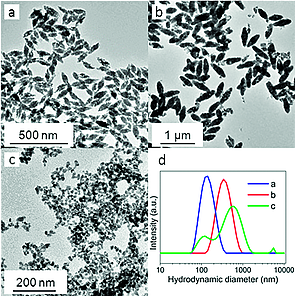
A new room-temperature method has been developed that yields, for the first time in the literature, uniform and well-dispersed CaWO4 nanospindles. This method is based on the use of microemulsions consisting of aqueous solutions of Ca2+ and WO42- precursors, cyclohexane as the organic medium, Triton X-100 as the surfactant, and n-octanol as the cosurfactant. We show that the formation of uniform nanospindles requires a restrictive set of experimental conditions. These particles crystallize into the tetragonal CaWO4 phase and emit blue-green luminescence when excited by UV radiation. The reported method is also useful for doping the CaWO4 spindles with Eu3+ or Dy3+ cations, resulting in multicolor emissions (red for Eu3+; white for Dy3+). The luminescence is much stronger when excited through a WO42--Ln(3+) (Ln = Eu or Dy) energy-transfer band than through the f-f transition bands of the Ln(3+) cations. Interestingly, because of the white luminescence associated with the Dy:CaWO4 nanophosphor, it might be useful for LED technologies. Luminescence dynamics and energy-transfer efficiency have been analyzed to determine the optimum phosphors. Finally, the Eu-doped CaWO4 nanospindles also showed excellent X-ray attenuation efficacy, which confers double functionality to this material as both a luminescence bioprobe and as a contrasting agent for X-ray computed-tomography.

Among the different approaches to humidity sensing available, those based on fluorescent signals are gathering a great deal of attention due to their fast response and versatility of detection and design. So far, all proposals have focused on the use of luminescent probes whose emission is either triggered or inhibited by the presence of water that reacts or alters their chemical environment, hence inducing the signal change. Here, a novel concept in fluorescent humidity sensing based on combining stimuli-responsive photonic resonators with molecular fluorescent probes is introduced. The resonator is assembled from humidity-swellable antimony phosphate nanosheets embedding a planar light-emitting probe, whose emission is dramatically modified by the changes that ambient humidity causes in its photonic environment. Guided by "in silico" optical design of the resonator architecture and subsequent experimental realization, two embodiments of fluorescent photonic humidity sensors featuring turn-on and turn-off detection schemes are presented. The interplay between the luminescent properties of an emitter and its photonic environment implies a fundamental advantage as the emitters are not chemically altered during the detection process. At the same time, it paves the way toward a new generation of photonic humidity sensors which can conveniently be interfaced with common fluorescence detection schemes.
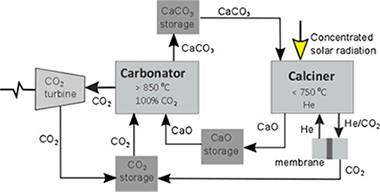
The Calcium Looping (CaL) process, based on the carbonation/calcination of CaO, has been proposed as a feasible technology for Thermochemical Energy Storage (TCES) in Concentrated Solar Power (CSP) plants. The CaL process usually employs limestone as CaO precursor for its very low cost, non-toxicity, abundance and wide geographical distribution. However, the multicycle activity of limestone derived CaO under relevant CaL conditions for TCES in CSP plants can be severely limited by pore plugging. In this work, the alternative use of calcium-rich steel and blast furnace slags after treatment with acetic acid is investigated. A main observation is that the calcination temperature to regenerate the CaO is significantly reduced as compared to limestone. Furthermore, the multicycle activity of some of the slags tested at relevant CaL conditions for TCES remains high and stable if the treated samples are subjected to filtration. This process serves to remove silica grains, which helps decrease the porosity of the CaO resulting from calcination in the mesoporous range thus mitigating pore plugging.
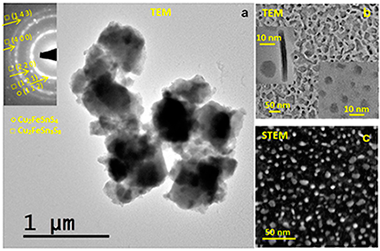
In this study we demonstrate the synthesis of quaternary semiconductor nanocrystals of stannite Cu2FeSnS4/rhodostannite Cu2FeSn3S8 (CFTS) via mechanochemical route using Cu, Fe, Sn and S elements as precursors in one-pot experiments. Methods of X-ray diffraction (XRD), nitrogen adsorption, high-resolution transmission electron microscopy (HRTEM), scanning transmission electron microscopy (STEM), energy-dispersive X-ray spectroscopy (EDX) and X-ray photoelectron spectroscopy (XPS) were applied to characterize properties of the unique nanostructures. Mechanochemical route of synthesis induced new phenomena like explosive character of reaction, where three stages could be identified and the formation of nanostructures 5-10 nm in size. By using XPS method, Cu(I), Fe(II), Sn(IV) and S(-II) species were identified on the surface of CFTS. The value of optical band gap 1.27 eV is optimal for semiconductors applicable as absorbers in solar cells. The significant photocatalytic activity of the CFTS nanocrystals was also evidenced. The obtained results confirm the excellent properties of the quaternary semiconductor nanocrystals synthesized from earth-abundant elements.
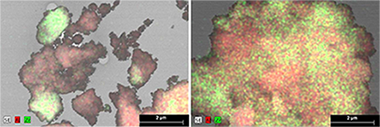
Two Zr-modified alumina supports were synthetized containing the same amount of Zr but a different distribution of this modifier over the alumina surface. These supports, together with the unmodified alumina carrier, were used to prepare three cobalt-based catalysts which were characterized and tested under relevant Fischer-Tropsch conditions. The three catalysts presented very similar porosity and cobalt dispersion. The addition of Zr nor its distribution enhanced the catalyst reducibility. The catalyst activity was superior when using a carrier consisting of large ZrO2 islands over the alumina surface. The use of a carrier with a homogeneous Zr distribution had however, a detrimental effect. Moreover, a faster initial deactivation rate was observed for the Zr-promoted catalysts, fact that may explain this contradictory effect of Zr on activity. Finally, the addition of Zr showed a clear enhancement of the selectivity to long chain hydrocarbons and ethylene, especially when Zr was well dispersed.
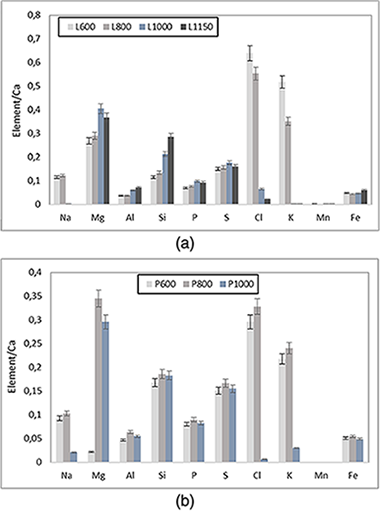
A characterization of ashes obtained by thermal treatments on greenhouse crops plant biomass residues is presented. The chemical analysis, by X-ray fluorescence (wavelength-dispersive X-ray fluorescence), and phase analysis, by X-ray diffraction, of the resultant ashes are reported. Thermal treatments of selected samples of these residues increase the relative amounts of inorganic Mg, Si, P, and S in the ashes, being these amounts as high as increasing temperature. As an opposite effect, Na, Cl, and K contents decrease as increasing temperature by a volatilization process of the chlorides, as confirmed by X-ray diffraction. The crystalline phase analysis of the ashes demonstrates the formation of inorganic constituents of the biomass, including alkaline chlorides and calcium salts (calcite, anhydrite, and apatite). Progressive thermal treatments induce the formation of new silicate phases (akermanite and grossularite) and silica (-quartz and cristobalite). Furthermore, the particle size of the starting biomass samples does not influence the evolution of the crystalline phases by thermal treatments. In contrast, a previous leaching using water and subsequent heating at 1,000 degrees C produces the formation of periclase (MgO), lime (CaO), and the silicate gehlenite, without the presence of anhydrite. This study is interesting for future investigations on the residues as a profitable biomass source for energy production and sustainable large-scale management. Some potential applications of the resultant ashes can be proposed.

0D nanocomposites formed by small nanoparticles embedded in a second phase are very interesting systems which may show properties that are beyond those observed in the original constituents alone. One of the main parameters to understand the behavior of such nanocomposites is the determination of the separation between two adjacent nanoparticles, in other words, the thickness of the embedding phase. However, its experimental measurement is extremely complicated. Therefore, its evaluation is performed by an indirect approach using geometrical models. The ones typically used represent the nanoparticles by cubes or spheres.
In this paper the used geometrical models are revised, and additional geometrical models based in other parallelohedra (hexagonal prism, rhombic and elongated dodecahedron and truncated octahedron) are presented. Additionally, a hybrid model that shows a transition between the spherical and tessellated models is proposed. Finally, the different approaches are tested on a set of titanium carbide/amorphous carbon (TiC/a-C) nanocomposite films to estimate the thickness of the a-C phase and explain the observed hardness properties.
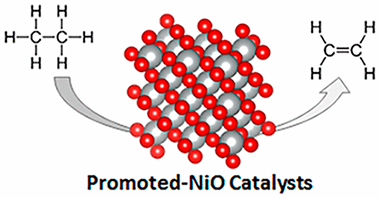
NiO and metal-promoted NiO catalysts (M-NiO, with a M/(M+Ni) atomic ratio of 0.08, with M = Nb, Sn, or La) have been prepared, tested in the oxidative dehydrogenation (ODH) of ethane, and characterized by means of XRD, TPR, HRTEM, Raman, XPS, and in situ XAS (using H-2/He, air or C2H6/He mixtures). The selectivity to ethylene during the ODH of ethane decreases according to the following trend: Nb NiO Sn NiO > La NiO > NiO, whereas the catalyst reducibility (determined by both TPR and XAS using H-2/He mixtures) shows the opposite trend. However, different reducibility and catalytic behavior in the absence of oxygen (ethane/He mixtures) have been observed, especially when comparing Nb- and Sn-promoted NiO samples. These differences can be ascribed mainly to a different phase distribution of the promoter. The results presented here are discussed in terms of the nature of active and selective sites for ODH of ethane in selective and unselective catalysts, but also the role of promoters and the importance of their phase distribution.
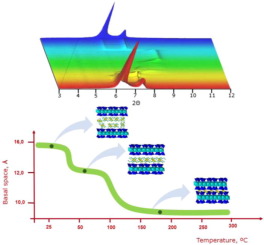
Swelling and dehydration under minor changes in temperature and water vapor pressure is an important property that clays and clay minerals exhibit. In particular, their interlayer space, the solid-water interface and the layers' collapse and re-expansion have received much attention because it affects to the dynamical properties of interlayer cations and thus the transfer and fate of water and pollutants. In this contribution, the dehydration and rehydration mechanism of a swelling high-charge mica family is examined by in situ X-ray Diffraction. The effect of the aluminosilicate layer charge and the physicochemical properties of the interlayer cations on these processes are analyzed. The results showed that the dehydration temperature and the number of steps involved in this process are related to the layer charge of the silicate and the physicochemical properties of the interlayer cations. Moreover, the ability to adsorb water molecules in a confined space with high electric field by the interlayer cations does not only depend on their hydration enthalpy but also on the electrostatic parameters of these cations.
In this work we analyze a phenomenon that takes place when growing magnetron sputtered porous/compact multilayer systems by alternating the oblique angle and the classical configuration geometries. We show that the compact layers develop numerous fissures rooted in the porous structures of the film below, in a phenomenon that amplifies when increasing the number of stacked layers. We demonstrate that these fissures emerge during growth due to the high roughness of the porous layers and the coarsening of a discontinuous interfacial region. To minimize this phenomenon, we have grown thin interlayers between porous and compact films under the impingement of energetic plasma ions, responsible for smoothing out the interfaces and inhibiting the formation of structural fissures. This method has been tested in practical situations for compact TiO2/porous SiO2 multilayer systems, although it can be extrapolated to other materials and conditions.
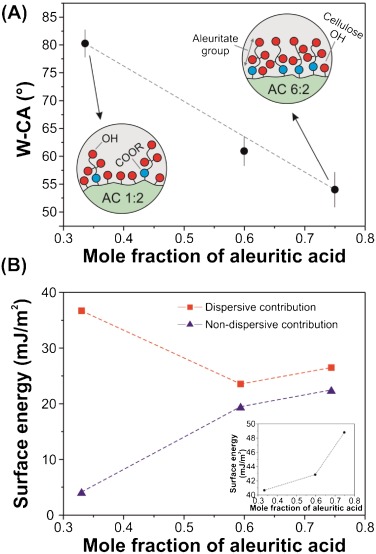
The synthesis of microcrystalline cellulose (MCC) and 9,10,16-hydroxyhexadecanoic (aleuritic) acid ester-based bioplastics was investigated through acylation in a mixed anhydride (trifluoroacetic acid (TFA)/trifluoroacetic acid anhydride (TFAA)), chloroform co-solvent system. The effects of chemical interactions and the molar ratio of aleuritic acid to the anhydroglucose unit (AGU) of cellulose were investigated. The degree of substitution (DS) of new polymers were characterized by two-dimensional solution-state NMR and ranged from 0.51 to 2.60. The chemical analysis by attenuated total reflection Fourier transform infrared spectroscopy (ATR-FTIR) confirmed the presence of aleuritate groups in the structure induces the formation of new H-bond networks. The tensile analysis and the contact angle measurement confirmed the ductile behavior and the hydrophobicity of the prepared bioplastics. By increasing the aleuritate amounts, the glass transition temperature decreased and the solubility of bioplastic films in most common solvents was improved. Furthermore, this new polymer exhibits similar properties compared to commercial cellulose derivatives.

The electrospinning technique is a versatile method for the production of fibrous scaffolds able to resemble the morphology of the native extra cellular matrix. In the present paper, electrospinning is used to fabricate novel SiO2particles (type MCM-41) containing poly(epsilon-caprolactone) (PCL) fibers. The main aims of the present work are both the optimization of the particle synthesis and the fabrication of composite fibers, obtained using benign solvents, suitable as drug delivery systems and scaffolds for soft tissue engineering applications. The optimized synthesis and characterization of calcium-containing MCM-41 particles are reported. Homogeneous bead-free composite electrospun mats were obtained by using acetic acid and formic acid as solvents; neat PCL electrospun mats were used as control. Initially, an optimization of the electrospinning environmental parameters, like relative humidity, was performed. The obtained composite nanofibers were characterized from the morphological, chemical and mechanical points of view, the acellular bioactivity of the composite nanofibers was also investigated. Positive results were obtained in terms of mesoporous particle incorporation in the fibers and no significant differences in terms of average fiber diameter were detected between the neat and composite electrospun fibers. Even if the Ca-containing MCM-41 particles are bioactive, this property is not preserved in the composite fibers. In fact, during the bioactivity assessment, the particles were released confirming the potential application of the composite fibers as a drug delivery system. Preliminary in vitro tests with bone marrow stromal cells were performed to investigate cell adhesion on the fabricated composite mats, the positive obtained results confirmed the suitability of the composite fibers as scaffolds for soft tissue engineering.
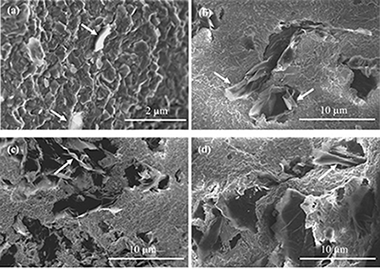
Yttria tetragonal zirconia ceramic composites with 1, 2.5, 5 and 10 vol% nominal contents of graphene nanoplatelets (GNPs) were fabricated and characterized. First, the GNP dispersion in isopropanol was optimized to de-agglomerate the GNPs without damaging their structure. Then, submicrometric fully dense composites were obtained via spark plasma sintering (SPS) at 1250 degrees C with a 5 min holding time. The processing routine produced a nearly homogeneous GNP dispersion in the ceramic matrix, and the GNPs preferential orientation was perpendicular to the sintering compression axis. A ceramic grain refinement due to the GNPs was also detected. The Vickers hardness measured on the plane perpendicular to the sintering compression axis (basal plane) was lower than on the cross sections. This anisotropy increased with the increasing GNP content, while the average hardness decreased. The electrical conductivity was also highly anisotropic, up to seven times higher for the basal planes. The electrical percolation threshold for these composites was estimated to be between 2.2 and 4.4 vol% of the GNP measured content.
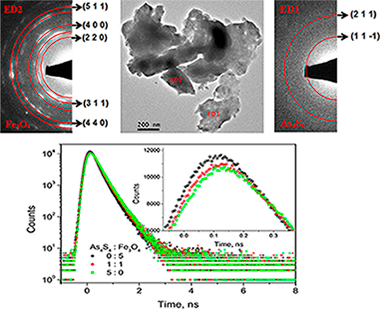
Multifunctional As4S4/Fe3O4 nanocomposites prepared by high-energy mechanical milling are probed by complementary methods of positron annihilation lifetime (PAL) spectroscopy, supported by microstructure characterization using X-ray powder diffraction (XRPD) with analysis applied to the first sharp diffraction peak (FSDP), morphology studies by transmission electron microscopy (TEM) with energy-dispersive spectroscopy (EDS) and high-resolution TEM (HRTEM).
These nanocomposites are shown to consist of Fe3O4 crystallites with particle sizes of 8-21 nm, and far separated beta-As4S4 crystallites surrounded by amorphous As-S phase. In respect to PAL data, the effect of milling is identified as possible conversion from Ps traps to positron-trapping sites depending on preferential chemistry of atomic surrounding. So, the interfacial triple junctions at the intersections of Fe3O4 crystallites are identified as principal positron traps in As4S4/Fe3O4 nanocomposites with competitive influence from free-volume defects of amorphous As-S phase.

BiFeO3 attracts considerable attention for its rich functional properties, including room temperature coexistence of magnetic order and ferroelectricity and more recently, the discovery of conduction pathways along ferroelectric domain walls. Here, insights into the defect chemistry and electrical properties of BiFeO3 are obtained by in situ measurements of electrical conductivity, sigma, and Seebeck coefficient, a, of undoped, cation-stoichiometric BiFeO3 and acceptor-doped Bi1-xCaxFeO3-delta ceramics as a function of temperature and oxygen partial pressure pO(2). Bi1-xCaxFeO3-delta exhibits p-type conduction; the dependencies of s and a on pO(2) show that Ca dopants are compensated mainly by oxygen vacancies. By contrast, undoped BiFeO3 shows a simultaneous increase of s and a with increasing pO(2), indicating intrinsic behavior with electrons and holes as the main defect species in almost equal concentrations. The pO(2)-dependency of s and a cannot be described by a single point defect model but instead, is quantitatively described by a combination of intrinsic and acceptor-doped characteristics attributable to parallel conduction pathways through undoped grains and defect-containing domain walls; both contribute to the total charge transport in BiFeO3. Based on this model, we discuss the charge transport mechanism and carrier mobilities of BiFeO3 and show that several previous experimental findings can readily be explained within the proposed model.
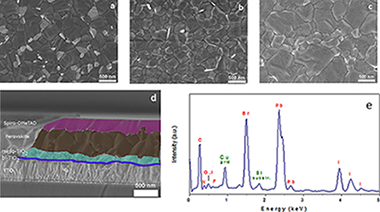
Organohalide perovskites have emerged as highly promising replacements for thin-film solar cells. However, their poor stability under ambient conditions remains problematic, hindering commercial exploitation. The addition of a fluorous-functionalized imidazolium cation during the preparation of a highly stable cesium-based mixed perovskite material Cs-0.05(MA(0.15)FA(0.85))(0.95)Pb(I0.85Br0.15)(3) (MA= methylammonium; FA= formamidinium) has been shown to influence its stability. The resulting materials, which vary according to the amount of the fluorous-functionalized imidazolium cation present during fabrication, display a prolonged tolerance to atmospheric humidity (> 100 days) along with power conversion efficiencies exceeding 16%. This work provides a general route that can be implemented in a variety of perovskites and highlights a promising way to increase perovskite solar cell stability.
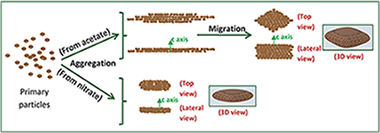
Clinical contrast agents (CAs) currently used in magnetic resonance imaging (MRI) at low fields are less effective at high magnetic fields. The development of new CAs is mandatory to improve diagnostic capabilities of the new generation of high field MRI scanners. The purpose of this study is to synthesize uniform, water dispersible LnF3 (Ln = Ho, Dy) nanoparticles (NPs) and to evaluate their relaxivity at high magnetic field (9.4 T) as a function of size and composition. Two different types of HoF3 NPs are obtained by homogeneous precipitation in ethylene glycol at 120 °C. The use of holmium acetate as holmium precursor leads to rhombus-like nanoparticles, while smaller, ellipsoid-like nanoparticles are obtained when nitrate is used as the holmium salt. To explain this behavior, the mechanism of formation of both kinds of particles is analyzed in detail. Likewise, rhombus-like DyF3 nanoparticles are prepared following the same method as for the rhombus-like HoF3 nanoparticles. We have found, to the best of knowledge, the highest transverse relaxivity values at 9.4 T described in the literature for this kind of CAs. Finally, the LnF3 NPs have shown negligible cytotoxicity for C6 rat glioma cells for concentrations up to 0.1 mg mL−1.
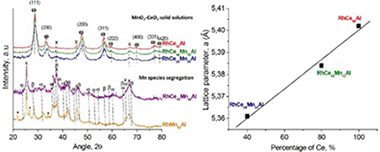
Rh/MnO2-CeO2/Al2O3 catalysts with different manganese-to-ceria ratios have been synthesized, characterized and tested in CO-PrOx reaction. The physicochemical properties of the solids were studied by XRD, Raman spectroscopy, BET surface area, H-2-TPR, TGA-DTG and TEM. The differences observed in the textural, structural and redox properties were related to the Mn-to-ceria ratio of the samples. The segregation of Mn species was observed at high Mn-to-Ce ratios. In opposite way, MnO2-CeO2 solid solutions were obtained at low Mn to Ce ones. In this last case, the physicochemical properties of the solids were favored by the intimate Rh-Ce-Mn contact. The effect of the Mn-Ce presence on Rh catalysts which promotes the catalytic behavior towards selective CO oxidation was observed to be better at low temperatures. At higher temperatures, Mn species promote the Reverse Water Gas Shift reaction, whilst ceria promotes the H-2 oxidation in the whole range of working temperatures.

Herein, we demonstrate a synthetic approach producing highly crystalline methylammonium lead bromide perovskite (MAPbBr3) microcubes at room temperature by injecting a perovskite precursor solution into an environmentally friendly antisolvent (isopropyl alcohol). Confirmed by X-ray and electron diffraction, as well as electron microscopy, these MAPbBr3 microcubes are single crystals and have perfect cubic structure, with sizes varying between 1 and 15 μm depending on the synthesis conditions. The stoichiometry of the MAPbBr3 crystal is proven by energy-dispersive X-ray analysis. Finally, optical analysis carried out by means of laser scanning confocal microscopy evidences how the crystalline quality of the microcubes translates into a homogeneous photoluminescence throughout the cube volume.
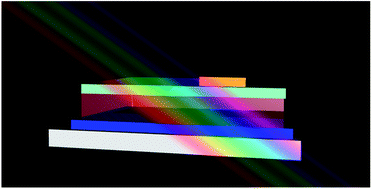
Perovskite solar cells have revolutionized the field of photovoltaics. Apart from their impressive photo-conversion efficiencies, the ease of their fabrication – principally when carried out by solution processing – has permitted addition of new functionalities to the photovoltaic cell. Some of these features are related to the optical properties. In this review, the different materials chemistry approaches that allow controlling the spectral absorption of ABX3 perovskite layers and the changes that they produce in the visual aspect of the solar cell will be covered. These modifications can be done either by playing with the composition of the precursors or by integrating different types of nanostructures. Spectral bandgap tuning, semitransparency, color and enhancement of light absorption are examples of how these modifications operate in the core of ABX3 perovskite solar cells. These optical features bring benefits in terms of photo-conversion efficiencies or else in the aesthetical integration of perovskite solar cells with architectonic elements for building integrated photovoltaics. Additionally, surface passivation approaches are covered to show its effect over the photo-conversion efficiency and stability of the cell.
Sculptured porous Bragg microcavities (BMs) formed by the successive stacking of columnar SiO2 and TiO2 thin films with a zig-zag columnar microstructure are prepared by glancing angle deposition. These BMs act as wavelength-dependent optical retarders. This optical behavior is attributed to a self-structuration of the stacked layers involving the lateral association of nanocolumns in the direction perpendicular to the main flux of particles during the multilayer film growth, as observed by focused ion beam scanning electron microscopy. The retardance of these optically active BMs can be modulated by dynamic infiltration of their open porosity with vapors, liquids, or solutions with different refractive indices. The tunable birefringence of these nanostructured photonic systems has been successfully simulated with a simple model that assumes that each layer within the BMs stack has uniaxial birefringence. The sculptured BMs have been incorporated as microfluidic chips for optical transduction for label-free vapor and liquid sensing. Several examples of the detection performance of these chips, working either in reflection or transmission configuration, for the optical monitoring of vapor and liquids of different refractive indices and aqueous solutions of glucose flowing through the microfluidic chips are described.
icms
[+34] 954 48 95 27

 |
 |
 |
 |
 |