




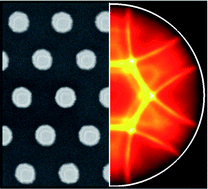
We demonstrate an enhanced and tailor-made directional emission of light-emitting devices using nanoimprinted hexagonal arrays of aluminum nanoparticles. Fourier microscopy reveals that the, luminescence of the device is not only determined by the material properties of the organic dye molecules but is also strongly influenced by the coherent scattering resulting from periodically arranged metal nanoparticles. Emitters can couple to lattice-induced hybrid plasmonic-photonic modes sustained by plasmonic arrays. Such modes enhance the spatial coherence of an emitting layer, allowing the efficient beaming of the emission along narrow angular and spectral ranges. We show that tailoring the separation of the nanoparticles in the array yields an accurate angular distribution of the emission. This combination of large-area metal nanostructures fabricated by nanoimprint lithography and light-emitting devices is beneficial for the design and optimization of solid-state lighting systems.

Quantification of light elements content in thin films is an important and difficult issue in many technological fields such as polymeric functional thin films, organic thin film devices, biomaterials, and doped semiconducting structures.
Light elements are difficult to detect with techniques based on X-ray emission, such as energy dispersive analysis of X-rays (EDAX). Other techniques, like X-ray photoelectron spectroscopy (XPS), can easily quantify the content of light elements within a surface but often these surface measurements are not representative of the lights elements global composition of the thin film. Standard Rutherford backscattering spectroscopy (RBS), using alpha particles as probe projectiles, is not a good option to measure light elements deposited on heavier substrates composed of heavier elements like Si or glass. Nuclear Reaction Analysis (NRA) offers a good quantification method, but most of the nuclear reactions used are selective for the quantification of only one element, so several reactions and analysis are necessary to measure different elements.
In this study, Elastic Backscattering Spectroscopy (EBS) using proton beams of 2.0 MeV simultaneously quantified different light elements (helium, carbon, nitrogen, oxygen, and fluorine) contained in thin films supported on silicon substrates. The capabilities of the proposed quantification method are illustrated with examples of the analysis for a series of thin film samples: amorphous silicon with helium bubbles, fluorinated silica, fluorinated diamond-like carbon and organic thin films. It is shown that this simple and versatile procedure allows the simultaneous quantification of light elements in thin films with thicknesses in the 200–500 nm range and contents lower than 10 at.%.
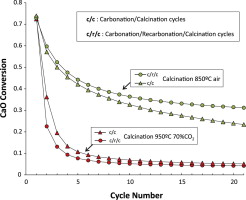
The multicyclic carbonation/calcination (c/c) of CaO solid particles at high temperature is at the basis of the recently emerged Calcium-looping (CaL) technology, which has been shown to be potentially suitable for achieving high and sustainable post-combustion CO2 capture efficiency. Despite the success of pilot plant projects at the MWth scale, a matter of concern for scaling-up the CaL technology to a commercial level (to the GWth scale) is that the CaO carbonation reactivity can be recovered only partially when the sorbent is regenerated by calcination at high temperatures (around 950 °C) as required by the CO2 high concentration in the calciner. In order to reactivate the sorbent, a novel CaL concept has been proposed wherein a recarbonator reactor operated at high temperature/high CO2 concentration leads to further carbonation of the solids before entering into the calciner for regeneration. Multicyclic thermogravimetric analysis (TGA) tests demonstrate the feasibility of recarbonation to reactivate the sorbent regenerated at high calcination temperatures yet at unrealistically low CO2 partial pressure mainly because of technical limitations concerning low heating/cooling rates. We report results from multicyclic c/c and carbonation/recarbonation/calcination (c/r/c) TGA tests at high heating/coling rates and in which the sorbent is regenerated in a dry atmosphere at high CO2 partial pressure. It is shown that at these conditions there is a drastic drop of CaO conversion to a very small residual value in just a few cycles. Moreover, the introduction of a recarbonation stage has actually an adverse effect. Arguably, CaCO3 decomposition in a CO2 rich atmosphere is ruled by CO2 dynamic adsorption/desorption in reactive CaO (1 1 1) surfaces as suggested by theoretical studies, which would preclude the growth of the regenerated CaO crystal structure along these reactive surfaces, and this effect would be intensified by recarbonation. Nevertheless, the presence of H2O in the calciner, which is also adsorbed/desorbed dynamically in CaO reactive planes, would shield CO2 adsorption/desorption thus mitigating the deeply detrimental effect of CO2 on the carbonation reactivity of the regenerated CaO structure. Oxy-combustion, which produces a significant amount of H2O, is currently used in pilot-scale plants to raise the temperature in the calciner. Auxiliary techniques are being explored to help heating the partially carbonated solids since oxyxombustion represents an important penalty to the CaL technology. Our study suggests that steam injection would be necessary in a dry calciner environment to avoid a sharp loss of CaO conversion if the sorbent is regenerated at high CO2 partial pressure.
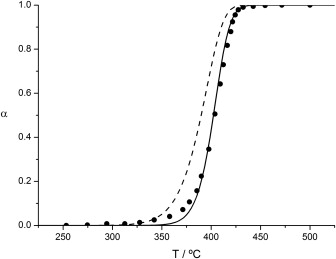
There is a significant interest in correlating polymer structure with thermal degradation behavior. Thus, polymer pyrolysis curves could be predicted from the chemical structure of the polymer. Recent proposals correlate the kinetic temperature function directly with the chemical structure of the polymer by means of the dissociation energy while assuming a semi-empirical first order model for the reaction fraction function. However, a first order model lacks physical meaning and produces significant deviations of the predicted curves, mostly under isothermal conditions. Thus, in this work, an upgrade of the method is proposed by using a new random scission kinetic model. The newly proposed kinetic equation has been checked by fitting the experimental data reported by different authors for the thermal pyrolysis of polystyrene. It has been demonstrated that it accounts for the experimental data of polymer degradation under different heating schedules with considerably higher precision than the previously assumed first order kinetics.
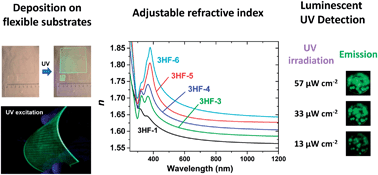
Luminescent organic-thin-films transparent in the visible region have been synthesized by a plasma assisted vacuum deposition method. The films have been developed for their implementation in photonic devices and for UV detection. They consist of a plasma polymeric matrix that incorporates 3-hydroxyflavone molecules characterized by absorption of UV radiation and emission of green light. The present work studies in detail the properties and synthesis of this kind of transparent and luminescent material. The samples were characterized by X-ray photoemission (XPS), infrared (FT-IR) and secondary ion mass (ToF-SIMS) spectroscopies; and their optical properties were analysed by UV-Vis absorption, fluorescence and ellipsometry (VASE) spectroscopies. The key factors controlling the optical and luminescent properties of the films are also discussed. Indeed, our experimental results show how the optical properties of the films can be adjusted for their integration in photonic devices. Moreover, time resolved and steady state fluorescence analyses, including quantum yield determination, indicate that the fluorescence efficiency is a function of the deposition parameters. An outstanding property of these materials is that, even for high UV absorption values (i.e. large layer thickness and/or dye concentration), the emitted light is not reabsorbed by the film. Such highly UV absorbent and green emitting films can be used as UV photodetectors with a detection threshold smaller than 10 mu W cm(-2), a value similar to the limit of some commercial UV photodetectors. Based on these properties, the use of the films as visual tags for the detection of solar UV irradiation is proposed.
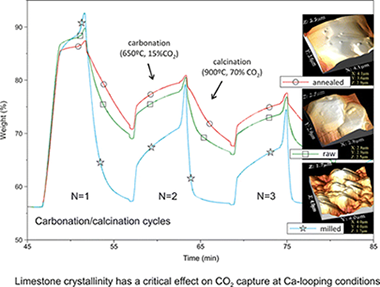
We analyze the role of limestone crystallinity on its CO2 capture performance when subjected to carbonation/calcination cycles at conditions mimicking the Ca-looping (CaL) technology for postcombustion CO2 capture. The behavior of raw and pretreated limestones (milled and thermally annealed) is investigated by means of thermogravimetric analysis (TGA) tests under realistic sorbent regeneration conditions, which necessarily involve high CO2 partial pressure in the calciner and quick heating rates. The pretreatments applied lead to contrasting effects on the solid crystal structure and, therefore, on its resistance to solid-state diffusion. Our results show that decarbonation at high CO2 partial pressure is notably promoted by decreasing solid crystallinity. CaO regeneration is fully achieved under high CO2 partial pressure at 900 °C in short residence times for the milled limestone whereas complete regeneration for raw limestone requires a minimum calcination temperature of about 950 °C. Such a reduction of the calcination temperature and the consequent mitigation of multicyclic capture capacity decay would serve to enhance the efficiency of the CaL technology. On the other hand, the results of our study suggest that the use of highly crystalline limestones would be detrimental since excessively high calcination temperatures should be required to attain full decarbonation at realistic conditions.
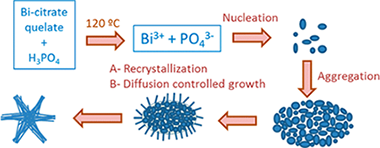
Monodisperse, monoclinic BiPO4 nanostars have been synthesized by a homogeneous precipitation reaction at 120 °C through controlled release of Bi3+ cations from a Bi–citrate chelate, in a mixture of glycerol and ethylene glycol, using H3PO4 as the phosphate source. The set of experimental conditions necessary to obtain uniform nanoparticles is very restrictive, as the change in either the polyol ratio or the reactant concentrations led to ill-defined and/or aggregated particles. The morphology of the particles consists of a starlike, hierarchical structure formed by the ordered arrangement of nanorod bundles. Transmission electron tomography has revealed that the nanostars are not spherical but flattened particles. Likewise, Fourier transform infrared spectroscopy and thermogravimetry have shown that the synthesized nanostars are functionalized with citrate groups. The mechanism of formation of the nanostars has been analyzed to explain their morphological features. The as-synthesized BiPO4 nanostars exhibit an efficient photocatalytic performance for the degradation of Rhodamine B. Finally, it has been demonstrated that the stars can be Eu3+-doped up to 2 mol % without any change in the particle morphology or symmetry, and the doped samples show emission in the orange-red region of the visible spectrum after ultraviolet excitation. These experimental observations make this material a suitable phosphor for biotechnological applications.
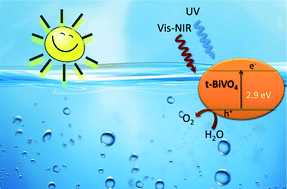
Erbium–yttrium co-doped BiVO4 with a tetragonal structure is synthesized by means of a surfactant free hydrothermal method. The studied photocatalyst shows good photoactivity under sun-like excitation for the degradation of methylene blue (MB) and for O2 evolution. From structural and morphological characterization, it has been stated that the presence of lanthanides induces the stabilization of the tetragonal phase. This is probably due to the substitutional occupation that occurs in the BiVO4 lattice. The photocatalytic performance under visible-NIR radiation clearly evidences the occurrence of an up-conversion process involved in the overall photo-electronic mechanism. The tetragonal phase Er0.0075,Y0.03–Bi0.9625VO4 system gives the highest O2 evolution rate (425 μmol g−1 h−1) under sun-like excitation, being 8 times higher than that attained for m-BiVO4 (53 μmol g−1 h−1).
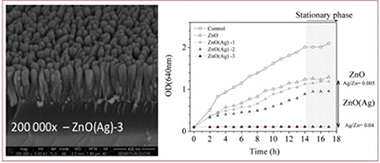
In this research work, the production of undoped and silver (Ag) doped zinc oxide (ZnO) thin films for food-packaging applications were developed. The main goal was to determine the influence of coatings morphology and thickness on the antimicrobial performance of the produced samples. The ZnO based thin films were deposited on PET (Polyethylene terephthalate) substrates by means of DC reactive magnetron sputtering. The thin films were characterized by optical spectroscopy, X-Ray Diffraction (XRD), X-ray photoelectron spectroscopy (XPS) and Scanning Electron Microscopy (SEM). The antimicrobial performance of the undoped and Ag-doped ZnO thin films was also evaluated. The results attained have shown that all the deposited zinc oxide and Ag-doped ZnO coatings present columnar morphology with V-shaped columns. The increase of ZnO coatings thickness until 200 nm increases the active surface area of the columns. The thinner samples (50 and 100 nm) present a less pronounced antibacterial activity than the thickest ones (200–600 nm). Regarding Ag-doped ZnO thin films, it was verified that increasing the silver content decreases the growth rate of Escherichia coli and decreases the amount of bacteria cells present at the end of the experiment
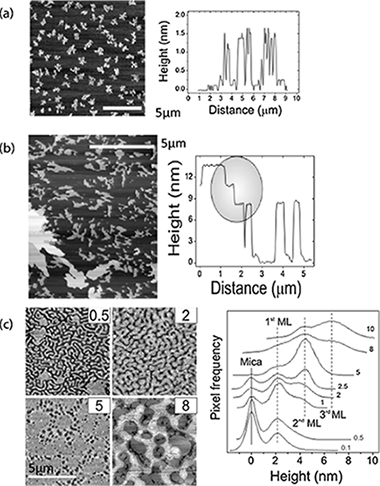
Biomimetics of materials is based on adopting and reproducing a model in nature with a well-defined functionality optimized through evolution. An example is barrier polymers that protect living tissues from the environment. The protecting layer of fruits, leaves, and non-lignified stems is the plant cuticle. The cuticle is a complex system in which the cutin is the main component. Cutin is a biopolyester made of polyhydroxylated carboxylic acids of 16 and 18 carbon atoms. The biosynthesis of cutin in plants is not well understood yet, but a direct chemical route involving the self-assembly of either molecules or molecular aggregates has been proposed. In this work, we present a combined study using experimental and simulation techniques on self-assembled layers of monomers selectively functionalized with hydroxyl groups. Our results demonstrate that the number and position of the hydroxyl groups are critical for the interaction between single molecules and the further rearrangement. Also, the presence of lateral hydroxyl groups reinforces lateral interactions and favors the bi-dimensional growth (2D), while terminal hydroxyl groups facilitate the formation of a second layer caused by head–tail interactions. The balance of 2D/3D growth is fundamental for the plant to create a protecting layer both large enough in 2D and thick enough in 3D.
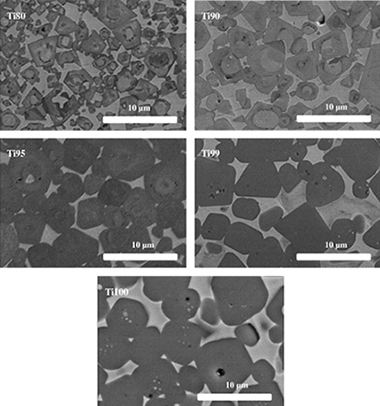
(TixTa1−x)(C0.5N0.5)–Co-based cermets with various Ta contents (x = 0, 0.01, 0.05, 0.1 and 0.2) were oxidized at 900 °C for 48 h in static air. A parabolic rate law, which is indicative of the formation of a protective oxide layer, was observed for all samples. The multi-layered oxide scale and the internal oxidation region that formed as the oxidation progressed toward the interior of the cermet specimens were characterized using XRD, SEM and EDS. The enhanced oxidation resistance achieved in cermets composed by a hard component with stoichiometry Ti0.95Ta0.05C0.5N0.5 may satisfy the optimal requirements for many applications in the field of cutting tools.
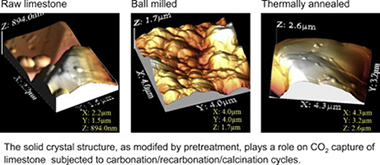
Large scale pilot plants are currently demonstrating the feasibility of the Calcium-looping (CaL) technology built on the multicyclic calcination/carbonation of natural limestone for post-combustion and precombustion CO2 capture. Yet, limestone derived CaO exhibits a drop of conversion when subjected to multiple carbonation/calcination cycles, which lessens the efficiency of the technology. In this paper we analyze a novel CaL concept recently proposed to mitigate this drawback based on the introduction of an intermediate stage wherein carbonation is intensified at high temperature and high CO2 partial pressure. It is shown that carbonation in this stage is mainly driven by solid-state diffusion, which is determined by the solid's crystal structure. Accordingly, a reduction of crystallinity by ball milling, which favors diffusion, serves to promote recarbonation. Conversely, thermal annealing, which enhances crystallinity, hinders recarbonation. An initial fast phase has been identified in the recarbonation stage along which the rate of carbonation is also a function of the crystal structure indicating a relevant role of surface diffusion. This is consistent with a recently proposed mechanism for nucleation of CaCO3 on the CaO surface in islands with a critical size determined by surface diffusion. A further issue analyzed has been the effects of pretreatment and cycling on the mechanical strength of the material, whose fragility hampers the CaL process efficiency. Particle size distribution of samples dispersed in a liquid and subjected to high energy ultrasonic irradiation indicate that milling promotes friability whereas thermal annealing enhances the resistance of the particles to fragmentation even though pretreatment effects become blurred after cycling. Our study demonstrates that recarbonation conditions and crystal-structure controlled diffusion are important parameters to be considered in order to assess the efficiency of CO2 capture in the novel CaL concept.
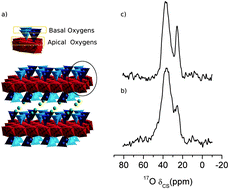
The structure of high-charged micas, Na-n-micas (n = 2 and 4), a family of synthetic silicates with a wide range of applications, was investigated through the use of 17O solid-state NMR at natural abundance in order to preserve quantitative spectral information. The use of a very high-field and highly sensitive probehead, together with 17O NMR literature data allowed for the detection of an isolated signal at 26 ppm, assigned partially to AlOAl, as evidence of the violation of Lowenstein's rule for Na-4-mica.
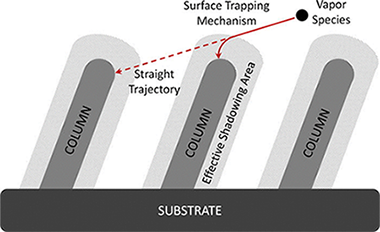
The growth of nanostructured physical vapor deposited thin films at oblique angles is becoming a hot topic for the development of a large variety of applications. Up to now, empirical relations, such as the so-called tangent rule, have been uncritically applied to account for the development of the nanostructure of these thin films even when they do not accurately reproduce most experimental results. In the present paper, the growth of thin films at oblique angles is analyzed under the premises of a recently proposed surface trapping mechanism. The authors demonstrate that this process mediates the effective shadowing area and determines the relation between the incident angle of the deposition flux and the tilt angle of the columnar thin film nanostructures. The analysis of experimental data for a large variety of materials obtained in our laboratory and taken from the literature supports the existence of a connection between the surface trapping efficiency and the metallic character of the deposited materials. The implications of these predictive conclusions for the development of new applications based on oblique angle deposited thin films are discussed.
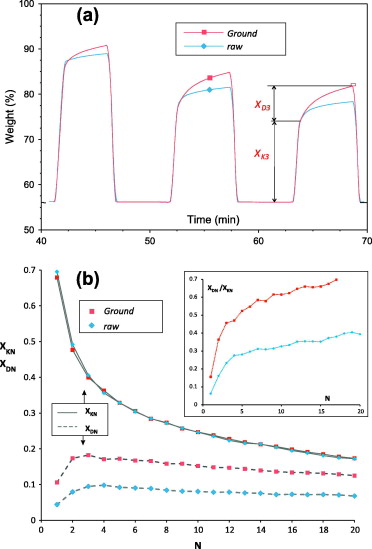
Limestone derived CaO conversion when subjected to multiple carbonation/calcination cycles is a subject of interest currently fueled by several industrial applications of the so-called Ca-looping (CaL) technology. The multicyclic CaO conversion at Ca-looping conditions exhibits two main features as demonstrated by thermogravimetric analysis (TGA). On one hand, carbonation occurs by two well differentiated phases: a first kinetically-driven fast phase and a subsequent much slower solid-state diffusion controlled phase. On the other, carbonation in the fast phase usually shows a drastic decay with the cycle number along the first carbonation/calcination cycles. This trend can be reversed by means of heat pretreatment, which induces a marked loss of fast conversion in the first carbonation but enhances diffusion of CO2 in the solid. Upon decarbonation the regenerated CaO skeleton displays an increased conversion in the fast carbonation phase of the next cycle, a phenomenon which has been referred to as reactivation. Nonetheless, sorbent reactivation is hampered by looping carbonation/calcination conditions as those to be likely found in practice such as carbonation stages characterized by low CO2 concentrations and short duration and calcination stages at high temperatures in a CO2 enriched atmosphere, which causes a sintering and loss of activity of the regenerated CaO skeleton. We analyze in this work sorbent reactivation as affected by heat pretreatment and carbonation/calcination conditions. Aimed at shedding light on the role played by these conditions on reactivation we look separately at the multicyclic evolution of conversion in the kinetic and diffusive phases. Generally, the evolution of multicyclic conversion after the first cycle can be described by a balance between the surface area gain due to diffusive carbonation and the surface area loss as caused by sintering in the calcination stage. A significant gain of relative surface area after the first cycle, which is favored by harshening the heat pretreatment conditions, leads however to a marked decay of it during subsequent cycles, which precludes reactivation for an extended interval of cycles. On the other hand, sorbent grinding, if performed before heat pretreatment, leads to a less marked but more sustainable reactivation along the cycles. A novel observation reported in our work is that pretreatment of limestone in a CO2 atmosphere leads upon a subsequent quick decarbonation to a CaO skeleton with extraordinarily enhanced reactivity in the kinetically-driven carbonation phase and with a high resistance to solid-state diffusion, which can be attributed to annealing of the crystal structure as reported by independent studies.
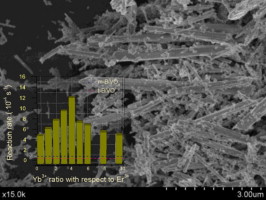
Ytterbium-Erbium co-doped BiVO4 have been synthesized by means of a surfactant free hydrothermal method having good photoactivities under sun-like excitation for the degradation of Methylene Blue and O2 evolution reactions. From the structural and morphological characterization it has been stated that the presence of Yb3+ and Er3+ induces the stabilization of the tetragonal phase probably due to its substitutional incorporation in the BiVO4 lattice. The occurrence of the Yb3+,Er3+ co-doped monoclinic-tetragonal BiVO4 heterostructure induces the higher photocatalytic activities. The best photocatalytic performance was attained for the sample with 1:4 Er3+:Yb3+ ratio. The observed NIR photoactivity clearly denotes the occurrence of an up-conversion mechanism involved in the overall photocatalytic process.
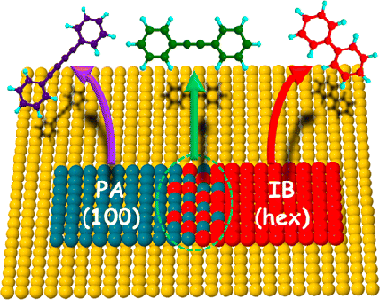
Phenylacetylene (PA) and iodobenzene (IB) are prototypical reactants in Sonogashira cross-coupling. Their adsorption behavior and reactivity on the Au(100) surface were studied by STM, temperature-programmed desorption and reaction, and DFT calculations that included the effect of dispersion forces. The two species exhibited very different behavior. Thus, even at 200 K, PA rearranged Au surface atoms so as to lift the hex reconstruction and adsorb in 4-fold-symmetric islands on the unreconstructed 100 surface. On the other hand, IB adsorbed on the reconstructed hex surface, again as islands, forming three different coexisting close-packed structures. The DFT results are in good accord with these findings, demonstrating the strong preference of PA and IB for the (100) and hex surfaces, respectively. Moreover, the calculated adsorption energies were in satisfactory agreement with values estimated from the desorption data. Adsorbed separately, both PA and IB underwent homocoupling yielding diphenyl diacetylene and biphenyl, respectively; in the former case, reaction appeared to originate at island boundaries. On the well-annealed surface, coadsorbed PA and IB behaved independently, generating only products of homocoupling. However, on the Ar+ roughened surface, Sonogashira cross-coupling also occurred, yielding diphenyl acetylene. These findings are discussed in terms of the island-forming propensity of the reactants, amplified by the labile nature of the Au 100 surface under adsorption and the marked preference of the two reactants for different substrate structures, factors that act to inhibit the formation of a mixed adlayer and suppress reactivity. The implications for the behavior of practical Au nanoparticle catalysts are considered.
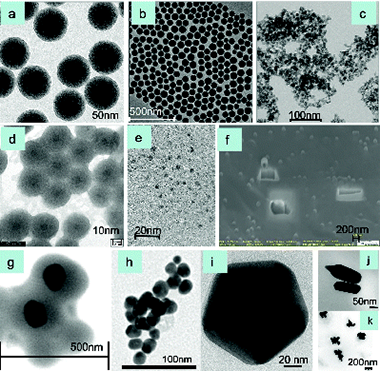
This article gives an overview of the different techniques used to identify, characterize, and quantify engineered nanoparticles (ENPs). The state-of-the-art of the field is summarized, and the different characterization techniques have been grouped according to the information they can provide. In addition, some selected applications are highlighted for each technique. The classification of the techniques has been carried out according to the main physical and chemical properties of the nanoparticles such as morphology, size, polydispersity characteristics, structural information, and elemental composition. Microscopy techniques including optical, electron and X-ray microscopy, and separation techniques with and without hyphenated detection systems are discussed. For each of these groups, a brief description of the techniques, specific features, and concepts, as well as several examples, are described.
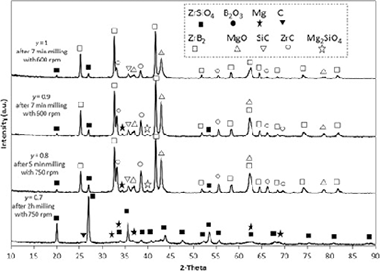
Herein, ZrSiO4/B2O3/Mg/C system was used to synthesize a ZrB2-based composite by means of a high energy ball milling process. A mechanically induced self-sustaining reaction was achieved in this system. A nanocomposite powder of ZrB2–SiC–ZrC was prepared with an ignition time of approximately 6 min of milling. The role of the stoichiometric amounts of B2O3 and carbon was investigated to clarify the governing mechanism for the formation of the product.
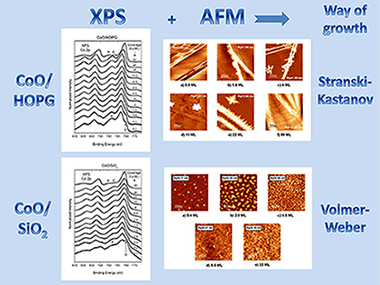
The growth of cobalt oxides by reactive thermal evaporation of metallic cobalt on highly oriented pyrolytic graphite (HOPG) and SiO2 (X cut quartz surface), in an oxygen atmosphere at room temperature, has been chemically and morphologically studied by means of X-ray photoelectron spectroscopy and atomic force microscopy. The chemical analysis, which also includes cluster calculations, reveals that for the early deposition stages on both substrates, Co2 + species are stabilized at the surface up to a coverage which depends on the substrate. Further coverages lead to the formation of the spinel oxide Co3O4. The results are discussed in terms of the dependence of the surface energy on the size of the CoO deposited moieties. On the other hand, it has been found that the initial way of growth of cobalt oxides on HOPG is of Stranski–Krastanov mode whereas on SiO2 the growth is of Volmer–Weber mode. The differences in the growth morphology have been discussed in terms of the surface diffusivity of the CoO deposits on the substrates.
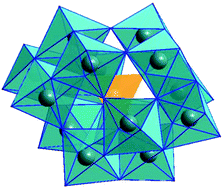
To what extent the presence of transition metal ions can affect the optical properties of structurally well-defined, metal-doped polyoxotitanium (POT) cages is a key question in respect to how closely these species model technologically important metal-doped TiO2. This also has direct implications to the potential applications of these organically-soluble inorganic cages as photocatalytic redox systems in chemical transformations. Measurement of the band gaps of the series of closely related polyoxotitanium cages [MnTi14(OEt)28O14(OH)2] (1), [FeTi14(OEt)28O14(OH)2] (2) and [GaTi14(OEt)28O15(OH)] (3), containing interstitial Mn(II), Fe(II) and Ga(III) dopant ions, shows that transition metal doping alone does not lower the band gaps below that of TiO2 or the corresponding metal-doped TiO2. Instead, the band gaps of these cages are within the range of values found previously for transition metal-doped TiO2 nanoparticles. The low band gaps previously reported for 1 and for a recently reported related Mn-doped POT cage appear to be the result of low band gap impurities (most likely amorphous Mn-doped TiO2).
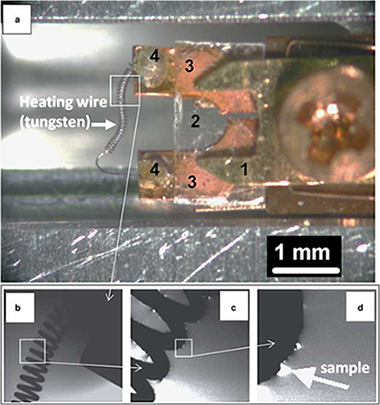
A tomographic heating holder for transmission electron microscopy that can be used to study supported catalysts at temperatures of up to similar to 1,500 degrees C is described. The specimen is placed in direct thermal contact with a tungsten filament that is oriented perpendicular to the axis of the holder without using a support film, allowing tomographic image acquisition at high specimen tilt angles with minimum optical shadowing. We use the holder to illustrate the evolution of the active phases of Pt nanoparticles on carbon black and PtPd nanoparticles on gamma-alumina with temperature. Particle size distributions and changes in active surface area are quantified from tilt series of images acquired after subjecting the specimens to increasing temperatures. The porosity of the alumina support and the sintering mechanisms of the catalysts are shown to depend on distance from the heating filament.

This study discusses the materials and traditional knowledge used in the manufacture and application of lime mortars and stuccoes by Romans and Arabs in Seville (southern Iberian Peninsula). All of the samples studied contain calcite as a binder, combined with aggregates based on river sand from the filling materials of the Guadalquivir River's depression, located in the vicinity of the Real Alcazar Palace in Seville, Spain, where the artefacts were discovered. The Romans used high-quality production technology, as evidenced by the careful selection of raw materials as well as by the adequate binder-to-aggregate ratio and the elevated homogeneity of the mortars and stuccoes. The suitable distribution of aggregates resulted in higher density values for Roman fragments than for Arabic ones. Results derived from Arabic samples suggest a decline in technology manufacture over time. This work provides useful information, particularly regarding the Roman and Arabic periods in the Iberian Peninsula. The analytical techniques employed in this study were X-ray diffraction (XRD), X-ray fluorescence (XRF)—using conventional and portable systems, scanning electron microscopy (SEM), petrographic microscopy, differential thermal analysis/thermogravimetry (DTA/TG), particle-size analysis and mercury intrusion porosimetry.
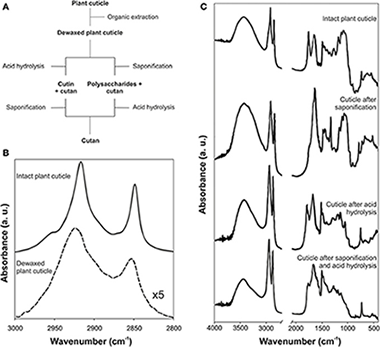
The cuticle is one of the most important plant barriers. It is an external and continuous lipid membrane that covers the surface of epidermal cells and whose main function is to prevent the massive loss of water. The spectroscopic characterization of the plant cuticle and its components (cutin, cutan, waxes, polysaccharides and phenolics) by infrared and Raman spectroscopies has provided significant advances in the knowledge of the functional groups present in the cuticular matrix and on their structural role, interaction and macromolecular arrangement. Additionally, these spectroscopies have been used in the study of cuticle interaction with exogenous molecules, degradation, distribution of components within the cuticle matrix, changes during growth and development and characterization of fossil plants.
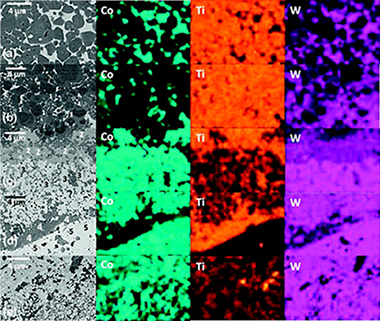
Cemented carbides and cermets are potential materials for high speed machining tools. However, cemented carbides are not chemically stable at high temperature and cermets present poor fracture toughness. Novel cermet/hardmetal multilayer systems show a huge potential for this intended application. It would be possible to achieve the right balance of the required thermomechanical properties using cermet as temperature protective outer layers and hardmetal as reinforcement layers. In this work, preliminary results on the microstructural and mechanical characterisation of a multilayer TiCxN1−x–Co/WC–Co composite densified by hot pressing are presented, with special attention to the properties of the interface. Microstructural observations revealed the existence of strong bonding interfaces between cermet and hardmetal layers due to chemical interaction during the sintering process. As a consequence, owing to the different coefficient of thermal expansion between cermet and hardmetal, a tensile and compressive biaxial residual stress of σres,Cermet ≈ +260 ± 50 MPa and σres,WC–Co ≈ −350 ± 70 MPa was estimated in the corresponding layers. Microindentation cracks introduced in the cermet layers (the less toughness material) and propagated transversely to the layers were arrested at the interface, showing the combined effect of toughness and compressive stresses on crack shielding.
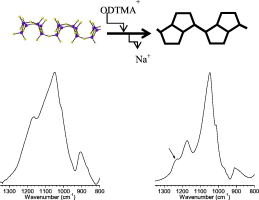
Inorganic–organic nanostructures, used as host materials for selective adsorption of functional molecules and as mesostructured material precursors, can be constructed by the interlayer modification of inorganic layered materials with surfactants. The formation mechanism is mainly determined by the surfactant assemblies in the 2D limited space. In this paper, a detailed structural analysis of the lamellar mesophases prepared from kanemite, a lamellar silicate, and octadecyltrimethylammonium (ODTMA) under various conditions was reported. The adsorbed amount of ODTMA and the long and short range structural orders were explored by TGA, XRD, IR/FT and MAS NMR spectroscopies. The results revealed that ODTMA molecules were efficiently intercalated in the interlayer space of kanemite and, in all synthesis conditions, an ordered lamellar structure was obtained. The ODTMA adsorption in kanemite caused changes not only in the interlayer space but also in the silicate framework, where five-member rings were formed. The characteristics of the final products were influenced by the synthesis conditions, although the separation mode, filtration or centrifugation, was not relevant. Therefore, the adsorption conditions of ODTMA in kanemite will contribute to the design of novel layered materials with potential environmental and technological use.

One-step reactive extrusion-calendering process (REX-calendering) has been used in order to obtain sheets of 1 mm from poly(lactic acid) modified with a styrene-acrylic multifunctional oligomeric agent. In a preliminary internal mixer study, torque versus time has been monitored in order to ascertain chain extender ratios and reaction time. Once all the parameters were optimized, reactive extrusion experiments have been performed. An enhanced general analytical equation has been developed in order to evaluate the kinetic parameters of the thermal degradation of PLA sheets manufactured by reactive extrusion. This improvement has consisted of replacing the n-order conversion function by a modified form of the Sestak–Berggren equation f(α) = c (1 − α)nαm that led to a better adjustment of experimental data and also adequately represented the conventional mechanisms for solid-state processes. The kinetic parameters so obtained have been compared to those determined by conventional differential methods and n-order reaction kinetics. Given that the thermal degradation of PLA has been argued to be caused by random chain scission reactions of ester groups, the conversion function f(α) = 2 (α1/2 − α), corresponding to a random scission mechanism for L = 2 (as well as other functions for L values up to 8), has been tested. Once optimized the kinetic model, the thermal degradation kinetics of sheets obtained by REX-calendering process was compared to that of conventional sheets and polymer matrix.
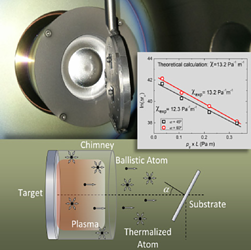
We describe here the deposition of thin films using magnetron sputtering at oblique angles. General relations between the deposition rates of the films and experimental parameters, such as gas pressure or substrate tilt angles, are deduced and experimentally tested. The model also permits the direct determination of the thermalization mean free path of the sputtered particles in the plasma gas, a key parameter defining the balance between ballistic and diffusive flows in the deposition reactor. The good agreement between experimental and calculated results supports the validity of our description, which becomes a useful tool to explain the main features of the magnetron sputtering deposition of thin films at oblique angles.
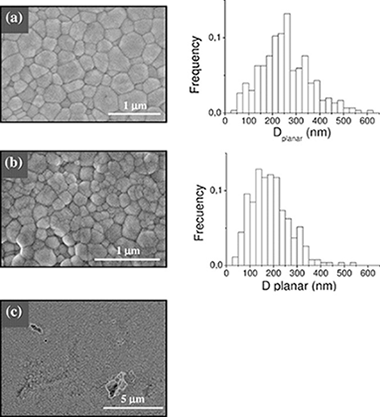
This paper is devoted to correlate the microstructure and room temperature mechanical properties of single-wall carbon nanotube (SWNT) reinforced 3 mol% yttria stabilized tetragonal zirconia with high SWNT content (2.5, 5 and 10 vol%). Fully dense composites were prepared by using a combination of aqueous colloidal powder processing and Spark Plasma Sintering. SWNTs were located at the ceramic grain boundaries and they were not damaged during the sintering process. The weak interfacial bonding between SWNTs and ceramic grains together with the detachment of SWNTs within thick bundles have been pointed out as responsible for the decrease of hardness and fracture toughness of the composites in comparison with the monolithic 3YTZP ceramic.
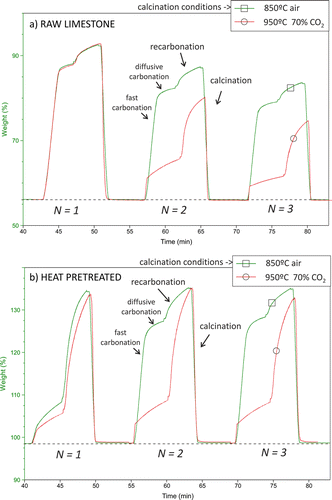
Even though an increasing number of pilot-scale plants are demonstrating the potential efficiency of the Ca-looping technology to capture CO2 at a commercial level, a still standing matter of concern is the loss of carbonation reactivity of the regenerated CaO by calcination, which is expected to be particularly marked at realistic conditions necessarily implying a high CO2 partial pressure in the calciner. In this work, we address the effect of previously reported strategies for sorbent reactivation, namely heat pretreatment and the introduction of a recarbonation stage before regeneration. Both techniques, either combined or separately, are shown to favor the carbonation reactivity, albeit CaO regeneration is usually carried out at low CO2 partial pressure in lab-scale tests. Novel results reported in this paper show the opposite when the sorbent is regenerated by calcination at high CO2 concentration, which is arguably due to the diverse mechanisms that rule decarbonation depending on the CO2 concentration in the calciner atmosphere. Dynamic and reversible adsorption/desorption of CO2 is thought to govern decarbonation during calcination at high CO2 partial pressure, which would be hindered by the introduction of a recarbonation stage before carbonation. Moreover, carbonation in the fast phase is severely hampered as a result of the marked loss of reactivity of the surface of CaO regenerated under high CO2 partial pressure. On the other hand, heat pretreatment and harsh calcination conditions lead to a notable enhancement of diffusion, which would favor the process efficiency. In these conditions, diffusion controlled carbonation becomes a significant contribution to CaO conversion, which is notably increased by prolonging the carbonation stage. Heat pretreatment allows also reducing the calcination temperature at high CO2 partial pressure while still achieving full decarbonation in short residence times.
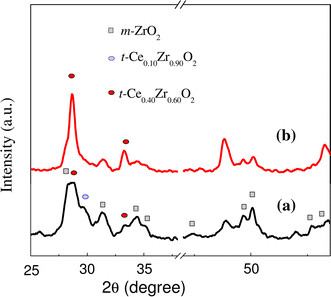
Cex Zr1−x O2 (x = 0.10, 0.16 and 0.33) nanocrystalline powders were obtained by a two-step synthesis technique and sintered by spark plasma sintering (SPS). As consequence of the reduction of Ce4+ to Ce3+ species by carbon in the graphite environment in SPS, phase assemblies including tetragonal, monoclinic and pyrochlore phases were generated in the ceramics during the sintering process. The electrical conductivity was highly dependent on phase assembly and atmosphere (N2, H2 and O2). A significant decrease in the activation energy was noticed in the ceramics with high pyrochlore content when measuring the conductivity in H2 atmosphere, consequence of the strong reduction promoted in these ceramics during the measurement. Equal conduction behavior with similar activation energy was observed in all the ceramics when measuring in O2 atmosphere.
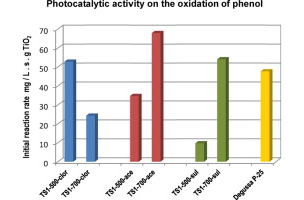
TiO2–SiO2 mixed oxides were synthesized by the sol–gel technique using three different acids, i.e., acetic, sulfuric, or chlorhydric acid. Their photocatalytic behavior was evaluated on the phenol oxidation in liquid phase and correlated with the characterization results. It was found that the kind of acid used during the preparation strongly influences the phase composition and stability of the TiO2 phases incorporated in the silica structure as well as the photocatalytic activity. In all cases, silica introduced a dispersive effect that stabilized the TiO2 crystalline phases upon calcination at 700 °C. SO42− and CH3COO− ions stabilized the anatase phase at high calcination temperatures (700 °C) leading to samples with the highest photoactivities. Cl− ions induced the formation of traces of rutile and brookite resulting in a lower photoactivity. The highest photoactivity was achieved with the catalyst synthesized with acetic acid and calcined at 700 °C (TS1-700-ace). The photocatalytic performance of this material was even better than that obtained with the commercial catalyst Degussa P-25.
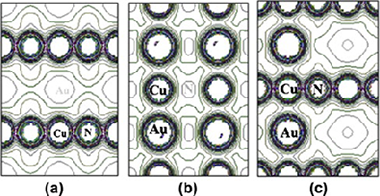
This study investigated the formation of a Cu3Au-nitride alloy using both experimental and computational methods. The alloy was produced as thin film by sputtering a Cu3Au target in a nitrogen atmosphere. The films were characterized for structure and composition by spectroscopic and diffraction techniques. The structure was established by Rietveld and ab inito methods. The structure is cubic and of the Fm3m space group, with a composition close to Cu6AuN2. Relative to the Cu3N structure, the Cu atoms occupy the faces, Au the half corners, and N the centers. The compound is a narrow-gap semiconductor with a positive hall coefficient that could be used for infrared detection.
The possibility of tailoring membrane surfaces with osteoconductive potential, in particular in biodegradable devices, to create modified biomaterials that stimulate osteoblast response should make them more suitable for clinical use, hopefully enhancing bone regeneration. Bioactive inorganic materials, such as silica, have been suggested to improve the bioactivity of synthetic biopolymers. An in vitro study on HOB human osteoblasts was performed to assess biocompatibility and bioactivity of SiO2 functionalized poly(lactide-co-glycolide) (PLGA) membranes, prior to clinical use. A 15 nm SiO2 layer was deposited by plasma enhanced chemical vapour deposition (PECVD), onto a resorbable PLGA membrane. Samples were characterized by X-ray photoelectron spectroscopy, atomic force microscopy, scanning electron microscopy, and infrared spectroscopy (FT-IR). HOB cells were seeded on sterilized test surfaces where cell morphology, spreading, actin cytoskeletal organization, and focal adhesion expression were assessed. As proved by the FT-IR analysis of samples, the deposition by PECVD of the SiO2 onto the PLGA membrane did not alter the composition and other characteristics of the organic membrane. A temporal and spatial reorganization of cytoskeleton and focal adhesions and morphological changes in response to SiO2 nanolayer were identified in our model. The novedous SiO2 deposition method is compatible with the standard sterilization protocols and reveals as a valuable tool to increase bioactivity of resorbable PLGA membranes.
Keywords:
attenuated total reflectance–Fourier transform infrared (ATR-FTIR);biomechanics;cuticle;cutin;flavonoids;tomato (Solanum lycopersicum) fruit
Summary
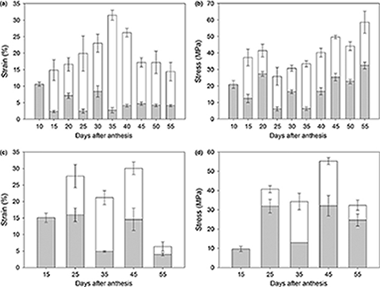
- In this study, growth-dependent changes in the mechanical properties of the tomato (Solanum lycopersicum) cuticle during fruit development were investigated in two cultivars with different patterns of cuticle growth and accumulation.
- The mechanical properties were determined in uniaxial tensile tests using strips of isolated cuticles. Changes in the functional groups of the cuticle chemical components were analysed by attenuated total reflectance–Fourier transform infrared (ATR-FTIR).
- The early stages of fruit growth are characterized by an elastic cuticle, and viscoelastic behaviour only appeared at the beginning of cell enlargement. Changes in the cutin:polysaccharide ratio during development affected the strength required to achieve viscoelastic deformation. The increase in stiffness and decrease in extensibility during ripening, related to flavonoid accumulation, were accompanied by an increase in cutin depolymerization as a result of a reduction in the overall number of ester bonds.
- Quantitative changes in cuticle components influence the elastic/viscoelastic behaviour of the cuticle. The cutin:polysaccharide ratio modulates the stress required to permanently deform the cuticle and allow cell enlargement. Flavonoids stiffen the elastic phase and reduce permanent viscoelastic deformation. Ripening is accompanied by a chemical cleavage of cutin ester bonds. An infrared (IR) band related to phenolic accumulation can be used to monitor changes in the cutin esterification index.

Adsorption of phenol and methyl orange on the surface of TiO2 and Pt–TiO2 photocatalysts was investigated by FT-IR spectroscopy. It was found that platinum plays an important role in the adsorption properties of the studied substrates on TiO2. Platinum deposits modified the phenol-photocatalyst interaction providing new adsorption sites on TiO2 surface. On Pt–TiO2 photocatalysts, phenol mainly interacts via formation of adsorbed phenolates species. It was also found that the adsorption of methyl orange on titania and Pt–TiO2 photocatalysts occurs via interaction of the azo group with surface Ti4+. Pt photodeposition significantly increases the TiO2 photoreactivity in phenol and methyl orange photo-degradation; however, this increase depends on the properties of the Pt deposits. Moreover, it was observed that platinum content is the main factor determining the substrate-photocatalyst interaction and therefore the Pt–TiO2 photocatalytic performance.

In order to study the influence of the metallic substrate on the catalytic activity of structured micromonolithic catalysts, a CuOx/CeO2 catalyst was deposited on different oxidized or enameled metallic micromonoliths and tested in the PROX reaction under ideal and realistic conditions. The obtained results show as both activity and selectivity depend on the nature of the alloy and the nature of the interphase between the metal substrate and the catalyst layer. In oxidized micromonoliths, diffusion of Cr and Fe has been observed. For enameled micromonoliths, together with that diffusion, the interaction of the glass-ceramic interphase with the reactive gas streams resulted in the partial hydrolysis of this layer leading to diffusion toward the catalyst surface of the hydrolysis products, namely Na, Ca and Si cations. In some cases, the alteration of the surface composition favors the spreading of the copper active phase. As a result, it must be concluded that the metallic substrates are not spectators, at least in the PROX reaction, playing a fundamental role in the performances of the catalytic devices.
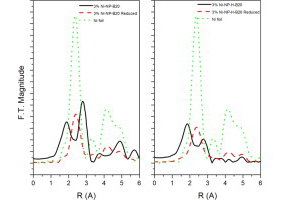
Some nickel catalysts supported on natural phosphate (NP) have been tested for the dry methane reforming reaction. Although the original impregnated 15%Ni/NP catalyst has no activity at all, the modification of the support by mechano-chemical and/or acid treatment strongly improved the catalytic performance, yielding a series of very active and stable catalysts. The chemical and physical characterization by X-ray diffraction (XRD), temperature programmed reduction (TPR), in situ X-ray absorption spectroscopy (XAS) and other techniques have shown that these treatments mainly modify the interaction between the nickel phase and the support surface. The nickel ions occupy calcium position in the surface of the phosphate phase, which stabilizes and improves the dispersion of nickel species. The final reduced catalysts present a much better dispersed metallic phase interacting with the NP surface, which has been identified as responsible for the observed outstanding catalytic performances.
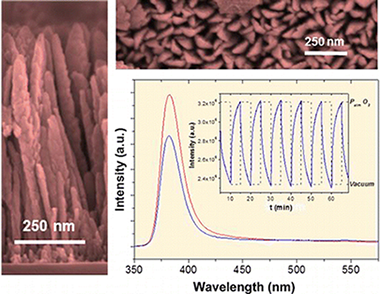
Transparent nanocolumnar porous ZnO thin films have been prepared by plasma-enhanced chemical vapor deposition. By controlling the H-2/O-2 ratio in the plasma gas, the deposition conditions were optimized to obtain an intense exciton emission at around 381 nm and virtually no luminescence in the visible region associated with electronic states in the gap. The intensity of the exciton band varied significantly and reversibly with the partial pressure of oxygen in the environment. This behavior and its variations with temperature and water vapor sustain the use of these thin films as photonic sensors of oxygen. Further experiments in liquid water show that fluorescence intensity also varies with the amount of dissolved oxygen even for concentrations lower than 0.02 mg/L where commercial oxygen galvanic sensors show limited sensitivity. These results and the use of ZnO as photonic sensor of oxygen are discussed by assuming a classical mechanism involving the photoactivated adsorption of oxygen when this oxide is irradiated with UV light during its fluorescence interrogation.
High-porosity samples of beech wood biocarbon (BE-C) were prepared by pyrolysis at carbonization temperatures T carb = 650, 1300, and 1600°C, and their resistivity ρ and thermal conductivity κ were studied in the 5–300 and 80–300 K temperature intervals. The experimental results obtained were evaluated by invoking X-ray diffraction data and information on the temperature dependences ρ(T) and κ(T) for BE-C samples prepared at T carb = 800, 1000, and 2400°C, which were collected by the authors earlier. An analysis of the κ(T carb) behavior led to the conclusion that the samples under study undergo an amorphous-nanocrystalline phase transition in the interval 800°C < T carb < 1000°C. Evaluation of the electronic component of the thermal conductivity revealed that the Lorentz number of the sample prepared at T carb = 2400°C exceeds by far the classical Sommerfeld value, which is characteristic of metals and highly degenerate semiconductors.
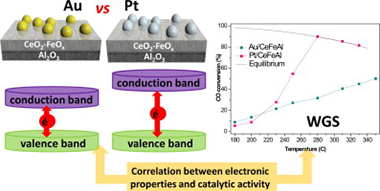
This work presents a comparison of the gold- and platinum-based catalysts behavior in the water–gas shift (WGS) reaction. The influence of the support, e.g., its composition and electronic properties, studied in detail by means of UV–Vis spectroscopy, of the metal nature and dispersion and of the stream composition has been evaluated. The catalytic performance of the samples is directly correlated with the electronic properties modification as a function of metal and/or support. Both metals present high activity in the selected reaction although in a different operation temperature window.

The production of H2 pure enough for use in fuel cells requires the development of very efficient catalysts for the water–gas shift reaction. Herein, a series of gold catalysts supported on ZnO-promoted CeO2–Al2O3 are presented as interesting systems for the purification of H2 streams through the water–gas shift reaction. The addition of ZnO remarkably promotes the activity of an Au/CeO2/Al2O3 catalyst. This increase in activity is mainly associated with the enhanced oxygen storage capacity exhibited for the Zn-containing solids. High activity and good stability and resistance towards start-up–shut-down situations was found, which makes these catalysts a promising alternative for CO clean-up applications.
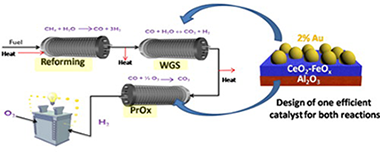
This work presents an evaluation of a high performance series of water gas shift (WGS) catalysts in the preferential CO oxidation reaction (PrOx) in order to examine the applicability of the same catalyst for both processes as a first step for coupling both reactions in a single process. Gold based catalysts are applied in an extensive study of the CO-PrOx reaction parameters, such as λ, WHSV, CO concentration and [H2O]/[CO2] ratio in order to obtain the best activity/selectivity balance. CO and H2 oxidation reactions were treated separately in order to establish the degree of CO/H2 oxidation competition. Additionally the catalysts behavior in the CO-PrOx parallel reactions such a WGS and RWGS have been also carried out to analyze their effect on product composition.
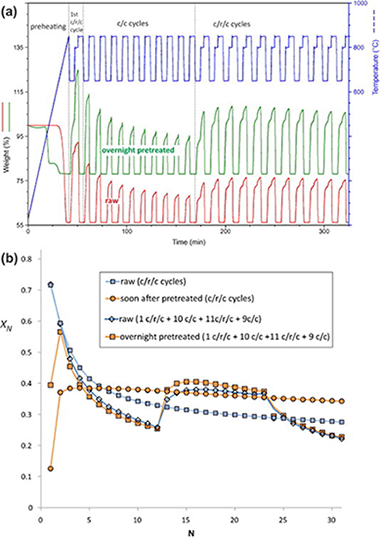
The Ca-looping (CaL) process, based on the multicyclic carbonation/calcination of limestone derived CaO, has emerged recently as a potentially economically advantageous technology to achieve sustainable postcombustion and precombustion CO2 capture efficiencies. Yet, a drawback that hinders the efficiency of the CaL process is the drastic drop of limestone capture capacity as the number of carbonation/calcination cycles is increased. Precalcination of limestone at high temperatures for a prolonged period of time has been proposed as a potential technique to reactivate the sorbent, which is however precluded by regeneration temperatures above 850 degrees C and low CO2 concentrations in the carbonator to be found in the practical situation. Under these conditions, heat pretreatment leads to a stable yet very small CaO conversion. On the other hand, the introduction of a recarbonation stage between the ordinary carbonation and calcination stages has been shown to decelerate the rate of sorbent activity decay even though this favorable effect is not noticeable up to a number of above 10-15 cycles. The present manuscript demonstrates that the synergetic action of heat pretreatment and recarbonation yields a high and stable value for the multicyclic conversion of limestone derived CaO. It is foreseen that recarbonation of heat pretreated limestone would lead to a reduction of process costs especially in the case of precombustion applications. Even though sorbent purging will always be needed because of ash accumulation and sul-phation in postcombustion CO2 capture applications, the stable and high multicyclic CaO conversion achieved by the combination of these techniques would make it necessary to a lesser extent.
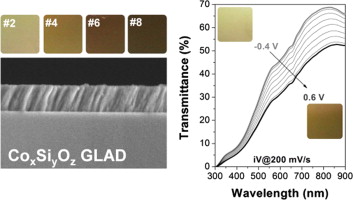
This work reports the synthesis and the characterization of amorphous CoxSiyOz thin films prepared by magnetron sputtering from a single cathode. Porous layers with outstanding electrochromic properties are obtained at room temperature in one step by performing the deposition at a glancing angle configuration. The electrochromic behavior of these layers in a basic aqueous medium was dependent on the Co/Si ratio in the films and in all cases was characterized by a fast response, a high coloration efficiency and a complete reversibility after several hundred cycles. A characteristic feature of these electrochromic layers is that, for a similar thickness, the range of transmittance modulation can be tuned by changing the Co/Si ratio in the films and, specifically for films with a high concentration of silicon, to change their aspect from an almost transparent to a full colored state.
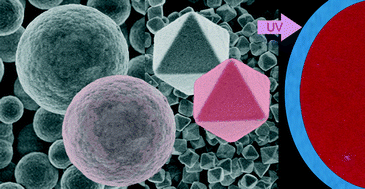
Facile synthesis routes have been developed for the preparation of uniform cubic bismuth fluoride and bismuth oxyfluoride particles. The synthesis methods are based on homogeneous precipitation reactions at 120 °C in solutions of bismuth nitrate and sodium tetrafluoroborate precursors in polyol-based solvents. Both the nature of the solvent and the heating modes (conventional or microwave-assisted heating) have a remarkable effect on the morphology and crystallinity of the resulting particles. Thus, polycrystalline spheres of α-BiF3 with a mean diameter ranging from 1.2 to 2 μm could be obtained by heating solutions with the appropriate reagent concentrations in a mixture of ethylene glycol and glycerol (1 : 1 by volume) using a conventional oven, whereas octahedral single crystals of α-BiOyF3−2y with mean edges ranging from 250 nm to 920 nm precipitated when using a diethylene glycol–water mixture (8 : 2 in volume) as solvent and a microwave reactor for heating. To explain these different morphological and structural features, the mechanism of formation of such particles was investigated. Both kinds of particles were also doped with Eu3+, and both the morphological and luminescence properties of the resulting materials were evaluated. It was found that the luminescence intensity of the europium-doped α-BiOyF3−2y nanoparticles was higher than that of the europium-doped α-BiF3 sub-micrometric spheres, which was associated with the higher crystallinity of the former. Moreover, the presence of oxygen in the europium-doped α-BiOyF3−2y samples permits the excitation of the europium cations through an Eu–O energy transfer process, which results in a much higher luminescence intensity with respect to that corresponding to the direct excitation of the europium cations. Finally, the effect of the amount of dopant on the luminescence properties of the phosphors was also evaluated.
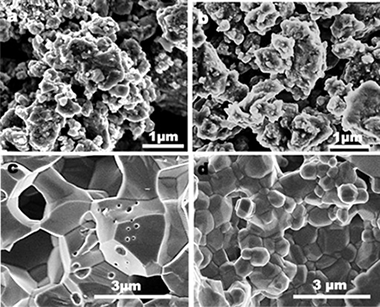
Mechanosynthesis of La1−xSrxMnO3 (x = 0, 0.25, 0.5, 0.75 and 1) was carried out at room temperature from stoichiometric mixtures of La2O3, Mn2O3 and SrO, obtaining monophasic powders with the perovskite structure. Physical properties of these materials and their chemical compatibility with the electrolyte yttria stabilized zirconia (YSZ), which depend strongly on the La/Sr ratio, were evaluated to corroborate availability to be implemented as cathode material in solid oxide fuel cells (SOFCs). Electrical conductivity values in air ranged between 100 and 400 S cm−1 in the temperature range of 25–850 °C. Samples presented low reactivity with YSZ in the working temperature range (600–1000 °C) maintaining the grain size small enough to preserve the catalytic activity for oxygen reduction.
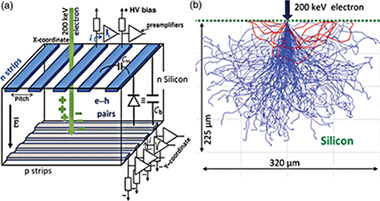
There is great interest in developing novel position-sensitive direct detectors for transmission electron microscopy (TEM) that do not rely in the conversion of electrons into photons. Direct imaging improves contrast and efficiency and allows the operation of the microscope at lower energies and at lower doses without loss in resolution, which is especially important for studying soft materials and biological samples. We investigate the feasibility of employing a silicon strip detector as an imaging detector for TEM. This device, routinely used in high-energy particle physics, can detect small variations in electric current associated with the impact of a single charged particle. The main advantages of using this type of sensor for direct imaging in TEM are its intrinsic radiation hardness and large detection area. Here, we detail design, simulation, fabrication and tests in a TEM of the front-end electronics developed using low-cost discrete components and discuss the limitations and applications of this technology for TEM.
Knowledge and understanding about radionuclides retention processes on the materials composing the engineered barrier (clay mineral and metallic container waste) are required to ensure the safety and the long-term performance of radioactive waste disposal. Therefore, the present study focuses on the competitiveness of clay and the metallic container in the process of adsorption/desorption of the radionuclides simulators of Am3+ and UO22+. For this purpose, a comparative study of the interaction of samarium (chosen as chemical analog for trivalent americium) and zirconyl (as simulator of uranyl and tetravalent actinides) with both FEBEX bentonite and metallic container, under subcritical conditions, was carried out. The results revealed that the AISI-316L steel container, chemical composition detailed in Table 1, immobilized the high-radioactive waste (HRW), even during the corrosion process. The ZrO2+ was irreversibly adsorbed on the minireactor surface. In the case of samarium SEM/EDX analysis revealed the formation of an insoluble phase of samarium silicate on the container surface. There was no evidence of samarium diffusion through the metallic container. Samarium remained adsorbed by the container also after desorption experiment with water. Therefore, steel canister is actively involved in the HRW immobilization.
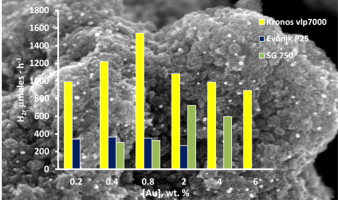
H2 production from methanol/water photo-splitting was compared using various commercial photocatalysts (Evonik P25 (P25), Hombikat UV-100 (HB) and Kronos vlp7000 (KR)) and others synthesised with a sol–gel-hydrothermal (HT) process and a sol–gel method followed by calcination (SG400 and SG750). All photocatalysts had been surface modified with Au at different concentrations, from 0.2 to 6.0 wt.%, using the photodeposition method. A complete characterisation study of the different photocatalysts was performed (BET, XRD, TEM, SEM-EDX, FTIR, UV–vis Reflectance Diffuse Spectra and aggregate size). The experiments were conducted for 3.5 h using 1 g L−1 of photocatalyst with methanol (25 vol.%) as sacrificial agent. In addition to H2 generation, production of the main intermediates, formaldehyde and formic acid, and of CO2 was also evaluated. The commercial photocatalyst KR at 0.8 wt.% Au had the highest H2 production of all the photocatalysts studied with 1542.9 μmol h−1. Of the photocatalysts synthesised by our group, SG750 at Au loading of 2.0 wt.% gave the highest H2 production of 723.1 μmol h−1. The SG750 photocatalyst at Au loading of 2.0 wt.% also had the highest H2 production yield per unit of surface area at 45.5 μmol g h−1 m−2.
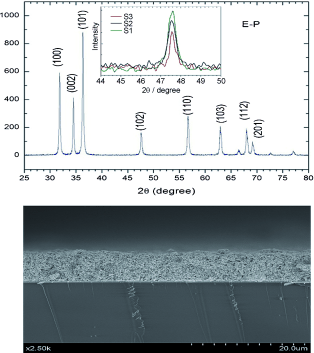
ZnO is an attractive material for applications in dye-sensitized solar cells and related devices. This material has excellent electron-transport properties in the bulk but its electron diffusion coefficient is much smaller in mesoporous films. In this work the electron-transport properties of two different kinds of dye-sensitized ZnO nanostructures are investigated by small-perturbation electrochemical techniques. For nanoparticulate ZnO photoanodes prepared via a wet-chemistry technique, the diffusion coefficient is found to reproduce the typical behavior predicted by the multiple-trapping and the hopping models, with an exponential increase with respect to the applied bias. In contrast, in ZnO nanostructured thin films of controlled texture and crystallinity prepared via a plasma chemical vapor deposition method, the diffusion coefficient is found to be independent of the electrochemical bias. This observation suggests a different transport mechanism not controlled by trapping and electron accumulation. In spite of the quite different transport features, the recombination kinetics, the electron-collection efficiency and the photoconversion efficiency are very similar for both kinds of photoanodes, an observation that indicates that surface properties rather than electron transport is the main efficiency-determining factor in solar cells based on ZnO nanostructured photoanodes.
Experimental catalytic activity measurements, Diffuse Reflectance Infrared Fourier Spectroscopy, and Density Functional Theory calculations are used to investigate the role and dynamics of surface oxygen vacancies in the CO oxidation with O2 catalyzed by Au nanoparticles supported on a Y-doped TiO2 catalyst. Catalytic activity measurements show that the CO conversion is improved in a second cycle of reaction if the reactive flow is composed by CO and O2 (and inert) while if water is present in the flow, the catalyst shows a similar behaviour in two successive cycles. DRIFTS-MS studies indicate the occurrence of two simultaneous phenomena during the first cycle in dry conditions: the surface is dehydroxylated and a band at 2194 cm-1 increases (proportionally to the number of surface oxygen vacancies). Theoretical calculations were conducted in order to explain these observations. On one hand, the calculations show that there is a competition between gold nanoparticles and OH to occupy the surface oxygen vacancies and that the adsorption energy of gold on these sites increases as the surface is being dehydroxylated. On another hand, these results evidence that a strong electronic transfer from the surface to the O2 molecule is produced after its adsorption on the Au/TiO2 perimeter interface (activation step), leaving the gold particle in a high oxidation state. This explains the appearance of a band at a wavenumber unusually high for the CO adsorbed on oxidized gold particles (2194 cm-1) when O2 is present in the reactive flow. These simultaneous phenomena indicate that a gold redispersion on the surface occurs under reactive flow in dry conditions generating small gold particles very actives at low temperature. This fact is notably favoured by the presence of surface oxygen vacancies that improve the surface dynamics. The obtained results suggest that the reaction mechanism proceeds through the formation of a peroxo-like complex formed after the electronic transfer from the surface to the gas molecule.
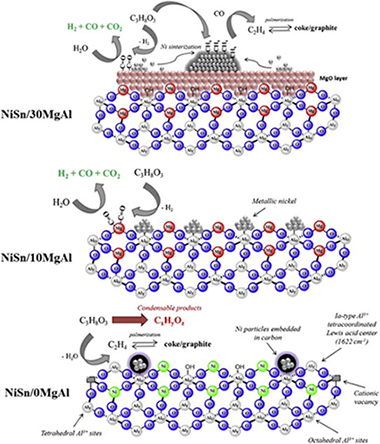
In this work we have investigated the hydrogen production from glycerol steam reforming. The effect of the acid-base properties was evaluated using four catalysts based in an alloy Ni-Sn as active phase supported over (Upsilon)-Al2O3 with different content in MgO, varying between 0 and 30 wt.% The incorporation of MgO results in the formation of MgAl2O4 spinel, which modifies the acid-base properties of the catalyst. Addition of MgO favored the glycerol conversion into gas, and the catalyst loaded with 10 wt.% MgO exhibited better catalytic performance and higher stability. A blank test with quartz was performed indicating that pyrolysis of glycerol takes place in the quartz.
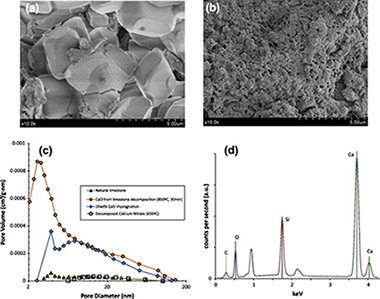
This work presents a CO2 sorbent that may be synthesized from low-cost and widely available materials following a simple method basically consisting of impregnation of a nanostructured silica support with a saturated solution of calcium nitrate. In a first impregnation stage, the use of a stoichiometric CaO/SiO2 ratio serves to produce a calcium silicate matrix after calcination. This calcium silicate matrix acts as a thermally stable and mechanically hard support for CaO deposited on it by further impregnation. The CaO-impregnated sorbent exhibits a stable CaO conversion at Ca-looping conditions whose value depends on the CaO wt% deposited on the calcium silicate matrix, which can be increased by successive reimpregnations. A 10 wt% CaO impregnated sorbent reaches a stable conversion above 0.6 whereas the stable conversion of a 30 wt% CaO impregnated sorbent is around 0.3, which is much larger than the residual conversion of CaO derived from natural limestone (between 0.07 and 0.08). Moreover, particle size distribution measurements of samples predispersed in a liquid and subjected to high energy ultrasonic waves indicate that the CaO-impregnated sorbent has a relatively high mechanical strength as compared to limestone derived CaO.
In this paper, the decomposition reaction models and thermal hazard properties of 1,3,5-trinitro-1,3,5-triazinane (RDX) and its PBXs bonded by Formex P1, Semtex 1A, C4, Viton A and Fluorel polymer matrices have been investigated based on isoconversional and combined kinetic analysis methods. The established kinetic triplets are used to predict the constant decomposition rate temperature profiles, the critical radius for thermal explosion and isothermal behavior at a temperature of 82 C. It has been found that the effect of the polymer matrices on the decomposition mechanism of RDX is significant resulting in very different reaction models. The Formex P1, Semtex and C4 could make decomposition process of RDX follow a phase boundary controlled reaction mechanism, whereas the Viton A and Fluorel make its reaction model shifts to a two dimensional Avrami-Erofeev nucleation and growth model. According to isothermal simulations, the threshold cook-off time until loss of functionality at 82 degrees C for RDX-C4 and RDX-FM is less than 500 days, while it is more than 700 days for the others. Unlike simulated isothermal curves, when considering the charge properties and heat of decomposition, RDX-FM and RDX-C4 are better than RDX-SE in storage safety at arbitrary surrounding temperature.
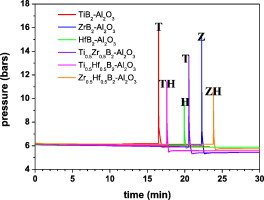
The synthesis of (Ti1 − xZrx)B2–Al2O3, (Ti1 − xHfx)B2–Al2O3 and (Zr1 − xHfx)B2–Al2O3 (x = 0, 0.5 and 1) powder nanocomposites via a mechanochemical method using TiO2, ZrO2, HfO2, HBO2 and Al as the raw materials was investigated. The formation of the nanocomposites proceeds via a mechanically-induced self-sustaining reaction (MSR) process that involves several simultaneous reactions. The aluminothermic reductions of the TMO2 and HBO2 produce Al2O3 and transition metal and boron elements, which in turn react to yield the diboride phase. The ignition of the complex combustion reaction occurred after a short milling time (15–30 min), instantly transforming most of the reactants into products. The sample composition was marked by the stoichiometry of the combustion reaction, and the resulting nanocomposites were analysed using XRD, ED, SEM, TEM and EDX techniques. The X-ray results confirmed the biphasic character of the prepared composite powder (TMB2 and Al2O3 structures); minor amounts of the Zr and Hf oxides were also observed. The achieved microstructure was characterised by the agglomeration of Al2O3 nanocrystallites and diboride crystals with a diffraction domain size ranging between 100 and 300 nm.
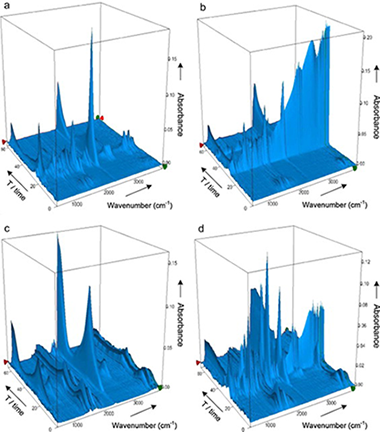
This paper presents in a comprehensive way the thermal behavior of natural and hot-washed sisal fibers, based on the fundamental components of lignocellulosic materials: cellulose, xylan and lignin. The research highlights the influence exerted on the thermal stability of sisal fibers by other constituents such as non-cellulosic polysaccharides (NCP) and mineral matter.
Thermal changes were investigated by thermal X-ray diffraction (TXRD), analyzing the crystallinity index (%Ic) of cellulosic samples, and by simultaneous thermogravimetric and differential thermal analysis coupled with Fourier-transformed infrared spectrometry (TG/DTA-FTIR), which allowed to examine the evolution of the main volatile compounds evolved during the degradation under inert and oxidizing atmospheres. The work demonstrates the potential of this technique to elucidate different steps during the thermal decomposition of sisal, providing extensible results to other lignocellulosic fibers, through the analysis of the evolution of CO2, CO, H2O, CH4, acetic acid, formic acid, methanol, formaldehyde and 2-butanone, and comparing it with the volatile products from pyrolysis of the biomass components. The hydroxyacetaldehyde detected during pyrolysis of sisal is indicative of an alternative route to that of levoglucosan, generated during cellulose pyrolysis.
Hot-washing at 75 °C mostly extracts non-cellulosic components of low decomposition temperature, and reduces the range of temperature in which sisal decomposition occurs, causing a retard in the pyrolysis stage and increasing TbNCP and TbCEL, temperatures at the maximum mass loss rate of non-cellulosic polysaccharides and cellulose decompositions, respectively. However, enriching sisal fibers in cellulose produces a decrease of TbCEL under an oxidizing atmosphere, and furthermore, a delay of the combustion process, displacing TbCOM to higher temperatures.
The results and findings of the paper would help further understanding of thermal processes where Agave fibers are involved, as the decomposition of their composites.
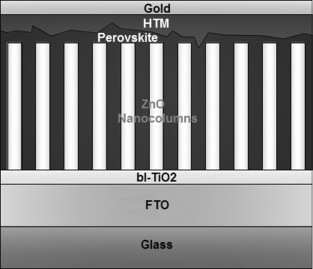
ZnO thin films having a nanocolumnar microstructure are grown by plasma-enhanced chemical vapor deposition at 423 K on pre-treated fluorine-doped tin oxide (FTO) substrates. The films consist of c-axis-oriented wurtzite ZnO nanocolumns with well-defined microstructure and crystallinity. By sensitizing CH3NH3PbI3 on these photoanodes a power conversion of 4.8 % is obtained for solid-state solar cells. Poly(triarylamine) is found to be less effective when used as the hole-transport material, compared to 2,2′,7,7′-tetrakis(N,N-di-p-methoxyphenylamine)-9,9′-spirobifluorene (spiro-OMeTAD), while the higher annealing temperature of the perovskite leads to a better infiltration in the nanocolumnar structure and an enhancement of the cell efficiency.
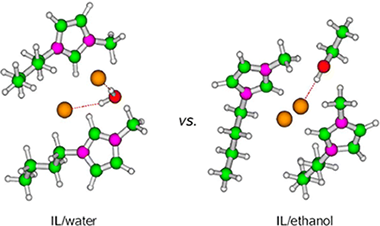
In this work, a study for understanding the role played by [ClBmim], [BF4Bmim], [PF6Bmim], and [CH3SO3Bmim] ionic liquids (ILs) in the synthesis of zeolites is presented. The use of [ClBmim] and [CH3SO3Bmim] ILs, as reported earlier [ Chem. Eur. J. 2013, 19, 2122] led to the formation of MFI or BEA type zeolites. Contrary, [BF4Bmim] and [PF6Bmim] ILs did not succeed in organizing the Si–Al network into a zeolite structure. To try to explain these results, a series of quantum mechanical calculations considering monomers ([XBmim]) and dimers ([XBmim]2) by themselves and plus cosolvent (water or ethanol) were carried out, where X ≡ Cl–, BF4–, PF6–, or CH3SO3–. Our attention was focused on the similarities and differences among the two types of cosolvents and the relation between the structure and the multiple factors defining the interactions among the ILs and the cosolvent. Although a specific pattern based on local structures explaining the different behavior of these ILs as a zeolite structuring template was not found, the calculated interaction energies involving the Cl– and CH3SO3– anions were very close and larger than those for BF4– and PF6– species. These differences in energy can be used as an argument to describe their different behavior as structure directing agents. Moreover, the topology of the cosolvent is also an ingredient to take into account for a proper understanding of the results.
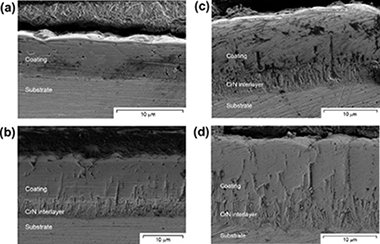
The oxidation resistance of CrAl(Y)N coatings deposited by reactive magnetron sputtering on P92 steel substrates was tested at 650 °C in 100% steam atmosphere up to 2000 h of oxidation. Mass gain measurements and characterisation of coatings and scales after oxidation show the enhanced oxidation resistance provided by the coatings with respect to that of the substrate. The dominant influence of the film microstructure developed due to the presence of an adhesion interlayer of CrN at the coating/substrate interface over Y additions is evidenced. The best performance is achieved by a CrAlN dense coating of around 6 μm without adhesion interlayer.
icms
[+34] 954 48 95 27

 |
 |
 |
 |
 |